If an employer, school, or court has asked you for a drug test, you have probably heard the words 5-panel or 10-panel. They sound technical but the idea is very simple. And most people never know about it. So let’s discuss what each test screens for, how they differ and which one you need.
Quick Answer: 5-Panel vs. 10-Panel Drug Test
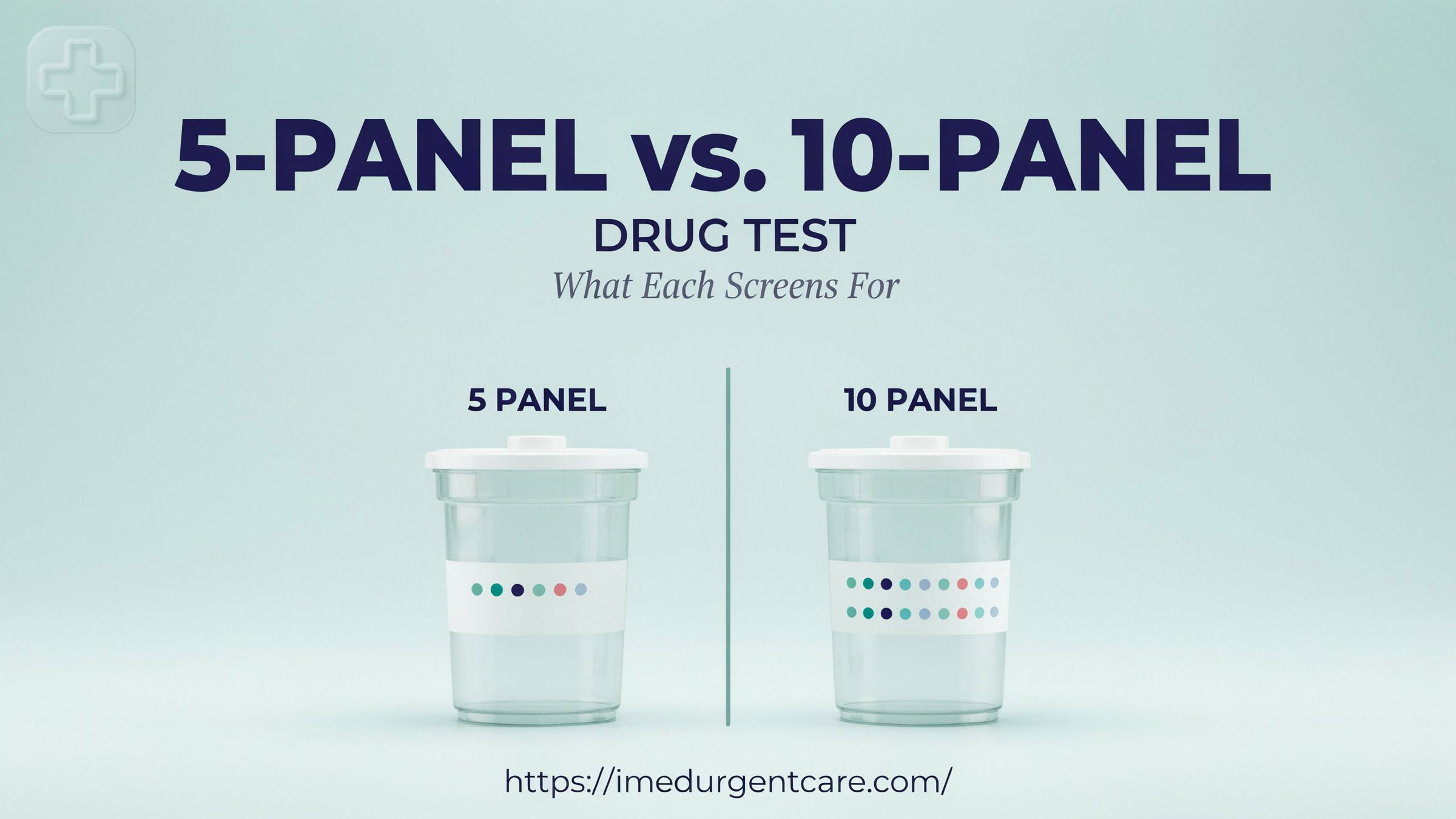
| A 5-panel drug test screens for five drug groups: marijuana (THC), cocaine, amphetamines, opioids (opiates), and PCP. A 10-panel drug test screens for those same five plus benzodiazepines, barbiturates, methadone, and usually two more substances that vary by lab. The 5-panel is the most common choice for general employment. The 10-panel is a broader screen and mostly used for healthcare, safety-sensitive, or legal situations. |
What Does Panel Mean in a Drug Test?
A panel is a group of drug categories tested at the same time from one sample. The number tells you how many categories are checked. A 5-panel checks five. A 10-panel checks ten.
Most drug tests use a urine sample. They check for drugs or metabolites which are substances left behind when your body breaks down a drug. These metabolites can often be detected for longer than the drug itself.
What Does a 5-Panel Drug Test Screen For?
| Drug group | Common examples |
| Marijuana (THC) | Cannabis, edibles, vapes |
| Cocaine | Powder cocaine, crack |
| Amphetamines | Amphetamine, methamphetamine; Adderall is in this class |
| Opioids / opiates | Codeine, morphine, heroin |
| PCP (phencyclidine) | Angel dust |
The 5-panel drug test is commonly used for pre-employment drug testing because it checks for five commonly misused drug groups and is usually more affordable than larger drug panels.
Standard 5-Panel vs. DOT 5-Panel
These are not always the same test. A DOT 5-panel drug test is required for federally regulated jobs, such as commercial driving, and follows federal rules under 49 CFR Part 40. It tests the same five main drug groups but checks for more drugs within the opioid and amphetamine groups.
-
Opioids: codeine, morphine, heroin (6-AM), plus hydrocodone, hydromorphone, oxycodone, and oxymorphone
-
Amphetamines: amphetamine, methamphetamine, MDMA (Ecstasy/Molly), and MDA
A basic non-DOT 5-panel may screen only for "opiates" (codeine, morphine, heroin). In that case, prescription painkillers such as oxycodone or hydrocodone may not be detected. If your employer needs those covered, ask for an expanded opioid panel.
A basic non-DOT 5-panel test only checks for common opiates such as codeine, morphine, and heroin. This means some prescription pain medicines, such as oxycodone or hydrocodone, may not be included. If these drugs need to be tested, ask for an expanded opioid panel.
What Does a 10-Panel Drug Test Screen For?
A 10-panel includes everything in the 5-panel, plus:
| Added drug group | Common examples |
| Benzodiazepines | Xanax, Valium, Klonopin, Ativan |
| Barbiturates | Phenobarbital, butalbital, secobarbital |
| Methadone | Used in opioid treatment and for pain |
| Two additional substances | Varies by lab (see below) |
Important: The 10-Panel Is Not Fully Standardized
Many websites list the last two as propoxyphene and methaqualone. Those are older drugs that are rarely used today. There is no single standard list for a 10-panel drug test outside of DOT testing. Some labs can replace them with more commonly tested drugs like oxycodone or MDMA.
Tip: Before taking the test, ask your employer or testing clinic for the exact list of drugs included in the panel. This helps you know what the test will check for.
5-Panel vs. 10-Panel: What’s the Difference?
| Feature | 5-Panel | 10-Panel |
| Drug groups tested | 5 | 10 |
| Tests prescription sedatives? | Usually no | Yes, such as benzodiazepines and barbiturates |
| Tests methadone? | No | Yes |
| Common use | Pre-employment testing and DOT testing (federal version) | Healthcare, caregiving, safety-sensitive jobs, and some legal cases |
| Cost | Usually lower | Usually higher |
| Standardized? | Mostly, the DOT version follows federal rules | No, the drug list can vary by lab |
| Common specimen | Urine, oral fluid can also be used | Usually urine |
Which Drug Test Do You Need?
The right drug test depends on what your employer, court, school, or program requires. A larger panel is not always necessary. Choose the test based on its purpose:
-
General jobs (retail, office, warehouse): Usually a 5-panel test
-
DOT / commercial driving: The federal DOT 5-panel test
-
Healthcare, pharmacy, home care, childcare: Often a 10-panel test because these jobs involve access to controlled medications
-
Probation, court, or custody cases: Follow the specific order; it may require a 10-panel or larger test
-
Personal testing: A 10-panel test provides broader coverage
If you are not sure which test you need, ask the person who requested the test: Which panel do I need, and is it DOT or non-DOT?
How Long Do Drugs Stay Detectable in Urine?
Drugs can stay detectable in urine for different amounts of time, depending on factors such as how much and how often you use, your metabolism, body mass, hydration, and urine pH.
-
As a general guide, amphetamines can be detected for up to about 2 days, cocaine and opioids for up to about 4 days, and methadone for around 3 days. Marijuana (THC) may be detectable for about 2 to 7 days after occasional use but it can remain detectable for 1 to 2 months or longer with regular use.
-
PCP can stay detectable for 1 to 2 weeks, and sometimes up to 30 days in chronic users. Benzodiazepines can be detected for up to about 7 days with therapeutic use and 4 to 6 weeks with long-term use.
-
Barbiturates can remain detectable for 2 days to 3 weeks, depending on whether they are short- or long-acting.
These are only typical ranges, and actual detection times can vary from person to person. Marijuana and benzodiazepines tend to show the biggest differences between occasional and long-term use because they can build up in the body.
What Happens During the Test?
-
Check-in: Bring a valid photo ID and any paperwork from your employer or the testing program.
-
Sample collection: You will provide a urine sample in a private restroom. The sample is collected using a standard process and recorded with a chain-of-custody form.
-
Screening: The sample is first checked with a quick test.
-
Confirmation: If the first test shows a non-negative result, the sample is usually tested again using a more accurate lab test. The first screening result is not always the final result.
-
Review: For many employer and DOT tests, a Medical Review Officer (MRO) reviews non-negative results and checks if a valid prescription could explain the result before it is reported.
What if the sample is diluted? Drinking too much water before the test can make your urine too diluted and may require another test. Drink fluids normally before your test.
Drug Testing and the Workplace in Ohio
Ohio allows adults to use marijuana but employers can still have their own drug testing and drug-free workplace policies under Ohio law. This means a positive THC test can still affect hiring or employment, even if marijuana use is legal outside of work. Federal rules like DOT requirements also apply to federally regulated jobs. Since policies can vary by employer, check your workplace policy before taking a test. This is general information, not legal advice.
Drug Testing at iMed Urgent Care in Columbus, Ohio
iMed Urgent Care offers walk-in drug testing at three Columbus-area locations:
The available panels, DOT and non-DOT testing, pricing, result times, hours, and required documents can vary. Contact iMed Urgent Care before your visit to confirm the test your employer requires and what you need to bring. Walk-ins are available seven days a week. Bring a valid photo ID and any paperwork from your employer.
Visit your nearest iMed Urgent Care location or call ahead to confirm the required panel and testing details.