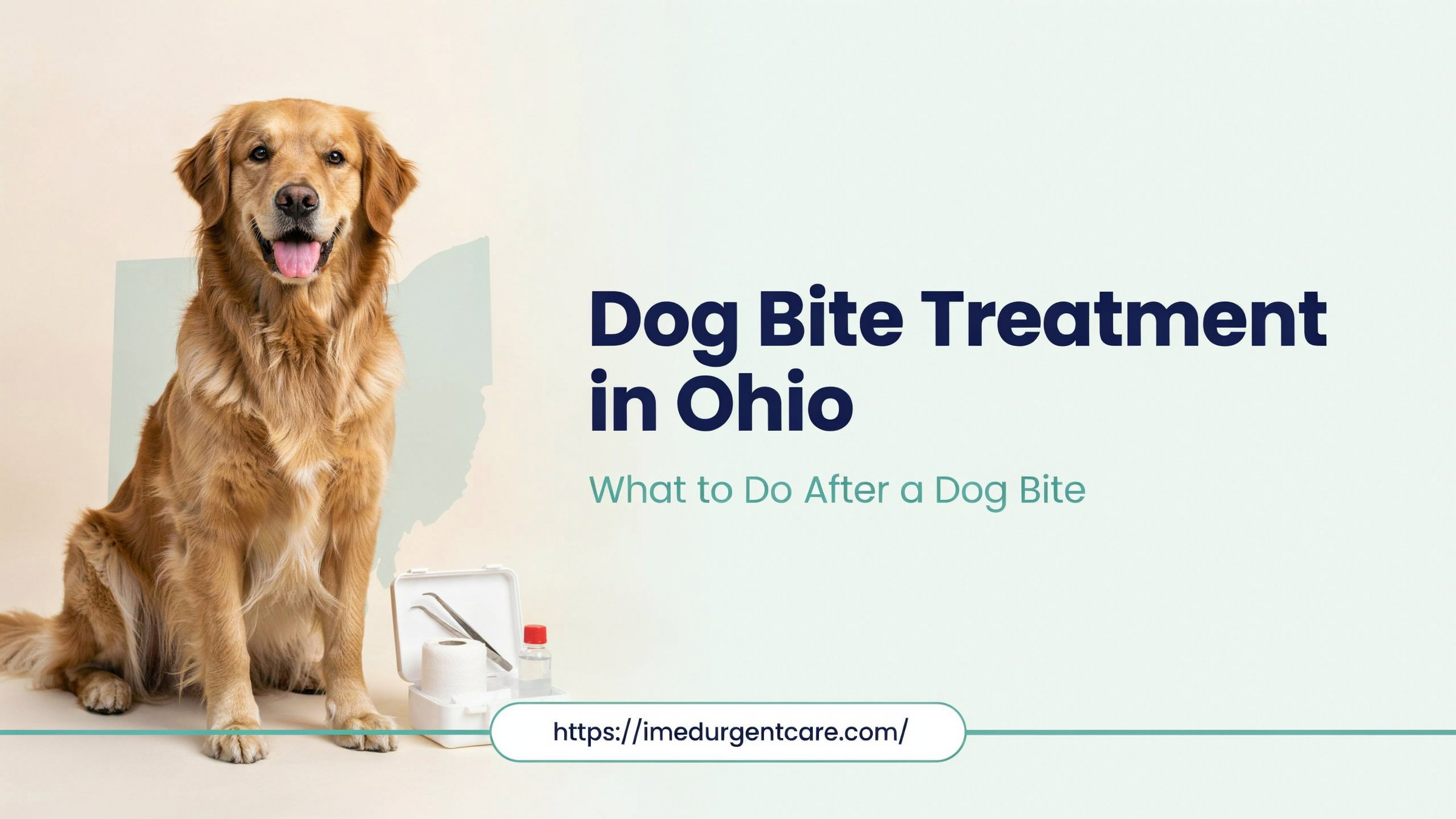
A dog bite is common and can happen anywhere in just seconds while you’re walking, at a family gathering, or even from a dog you’ve known for years. About 4.5 million dog bites happen in the United States each year and around 1 in 5 becomes infected and needs medical care. Columbus also sees many reported dog bites, so this is a genuinely local problem.
But what should you do after a dog bite? Which one is the right choice for you: urgent care or emergency room? And if you are in Ohio, how can iMed Urgent Care in Grove City, East Columbus, or South Columbus help you? Let’s discuss it all.
Quick Answer: What to Do Immediately After a Dog Bite
| Move away from the dog and get to a safe place.Wash the wound with soap and warm running water for 5–10 minutes.Stop the bleeding by gently pressing a clean cloth on the wound.Apply antibiotic ointment and cover the wound with a clean, dry bandage.Get the dog owner’s information, including their name, address, and the dog’s rabies vaccination record, if available.Get medical care the same day, even if the bite looks small because dog bites can become infected.Report the bite to your local health department within 24 hours as required by Ohio law. |
Step-by-Step: Dog Bite First Aid at Home
Most dog bites are not life-threatening. But taking the right steps in the first 10–15 minutes can help lower the risk of infection. Follow these steps:
-
Move away from the dog. Find and get to a safe place and avoid running, yelling, or making sudden movements that could cause another bite. If children or others are nearby then help them get to safety first.
-
Check the wound. Look at whether the skin is broken, how much it is bleeding, and whether you can see deeper tissue, tendons, or bone. This can help you decide how quickly you need medical care.
-
Wash the wound well. Rinse the bite with warm running water and mild soap for 5–10 minutes. Cleaning the wound well helps remove dirt and bacteria and lowers the risk of infection.
-
Stop the bleeding. Place a clean cloth or sterile gauze over the wound and apply steady pressure. Minor bleeding often stops after several minutes of firm pressure.
-
Apply antibiotic ointment. After cleaning the wound, apply a thin layer of over-the-counter antibiotic ointment, such as one containing bacitracin.
-
Cover the wound. Place a clean, dry, non-stick bandage over the bite. Avoid wrapping it too tightly as the wound needs to drain.
-
Get information about the dog. If it is safe, collect the owner's name, address, phone number, and the dog's rabies vaccination information. If the dog is a stray or its vaccination status is unknown, tell your healthcare provider.
-
Take photos of the wound. Take clear pictures before and after covering the bite. These can be helpful for medical follow-up or if you need to report the bite later.
-
Get medical care the same day. Even a small-looking bite can push bacteria deep into your skin and cause an infection. Urgent care can evaluate most dog bites and guide you on whether you need additional treatment.
How Serious Is Your Dog Bite? Understanding Bite Severity
Dog bites can be small scratches, or they can be deep wounds that need emergency treatment. Knowing how serious the bite is can help you decide where to get care.
Minor Bites
If you have a minor bite that includes small scratches, tiny punctures, or bruises with little or no skin damage then you can easily clean and monitor them at home but a same-day urgent care visit is still a good idea. A provider can check it for deeper injuries and review your tetanus vaccination status.
Moderate Bites
In this case, the bite breaks the skin and causes bleeding, puncture wounds, or a wound that needs to be closed. In this situation, you can visit urgent care the same day for an evaluation. They will also recommend antibiotics, a tetanus booster, or other wound treatment if needed.
Severe Bites
As its name shows, deep cuts, crush injuries, exposed muscle, tendon or bone, bites to the face, hands, feet, or genitals, and bites with heavy or uncontrolled bleeding need emergency care. Young children with serious bites should also be evaluated in an emergency room.
Urgent Care or Emergency Room? A Quick Comparison
This is one of the most common questions after a dog bite. Use the table below as a general guide, and when in doubt, choose the higher level of care.
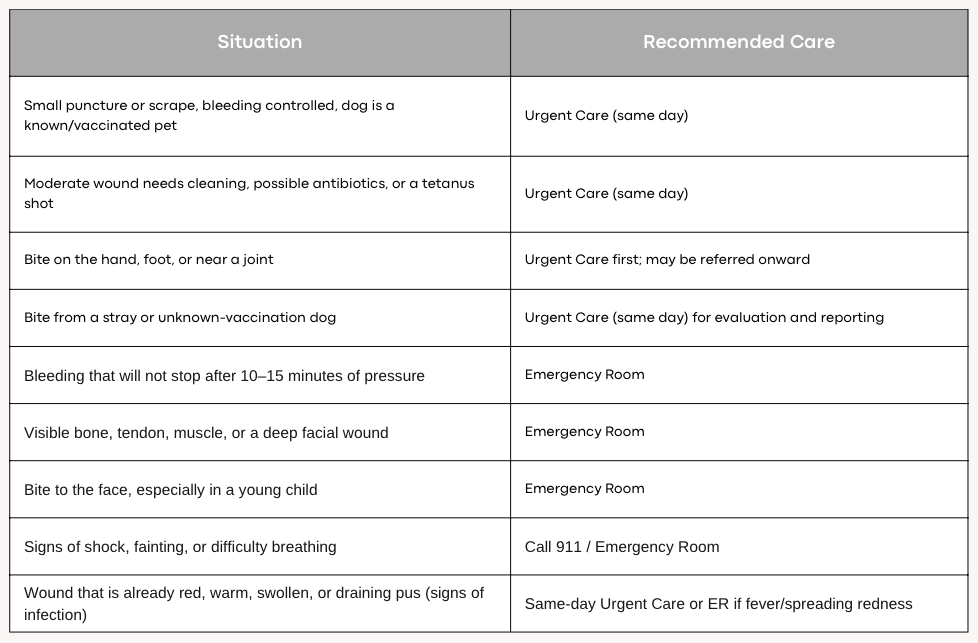
If you are in Ohio and need urgent care near you, iMed Urgent Care is here for you and treats most minor to moderate dog bites. Walk-ins are available seven days a week at Grove City, East Columbus, and South Columbus locations. If you have a severe bite, our team will provide initial care and direct you to the nearest emergency room when needed.
Do You Need a Tetanus Shot for a Dog Bite?
Dog bites and puncture wounds can increase the risk of tetanus, especially when the wound is deep or dirty. Your provider will check your vaccination history and decide if you need a booster.
-
More than 5 years: If your last tetanus shot was more than 5 years ago and the bite is deep or dirty, you need a Td or Tdap booster.
-
More than 10 years: A booster is mostly recommended if it has been more than 10 years since your last shot.
-
Not sure about your vaccination history: Tell your provider. They can help you whether you need a booster.
-
Children: Children who have not completed their routine DTaP vaccinations need additional doses as part of their treatment.
Dog Bite Infection: Signs, Bacteria, and Why Even Small Bites Matter
A dog’s mouth contains many types of bacteria, including Pasteurella, Staphylococcus, Streptococcus, and sometimes Capnocytophaga. A bite can push these bacteria deep into the skin and tissue. That is why even a small-looking bite can become infected and should be cleaned and checked properly.
Watch for These Signs of Infection
Infection can develop within the first few days after a bite. Watch for:
-
Increasing redness that spreads around the wound
-
Swelling, warmth, or increasing pain
-
Pus, cloudy drainage, or a bad smell
-
Red streaks spreading away from the wound
-
Fever, chills, or feeling sick
-
Swollen lymph nodes near the bite
If you notice these signs, get medical care the same day. Go to the ER if you have a high fever, rapidly spreading redness, or feel very unwell.
Who Has a Higher Risk of Complications?
Some people have a higher risk of infection or serious complications after a dog bite, including:
-
Adults over 50 and children under 5
-
People with diabetes, liver disease, or a weakened immune system
-
People without a spleen or with certain blood disorders
-
People with bites on the hands, feet, face, or near a joint, where infection can affect deeper tissues more easily
Ohio Dog Bite Reporting Requirements: What the Law Requires
In Ohio, dog bites are treated as a public health issue because of the risk of rabies. Under current Ohio law, a healthcare provider or veterinarian who knows about a dog bite must report it to the health commissioner of the district where the bite happened within 24 hours. The person who was bitten can also make the report.
What Happens After a Bite Is Reported in Columbus & Franklin County?
-
The local health department is notified. The appropriate health district reviews the bite and handles the required public health follow-up.
-
The dog can be placed under quarantine. Ohio law requires a dog that has bitten someone to be quarantined for 10 days or for another period if the local board of health finds that additional observation is needed.
-
The dog is monitored for signs of rabies. If the dog remains healthy during the required observation period, health officials can determine whether further rabies-related action is needed.
-
If the dog cannot be found or dies, health officials need to arrange rabies testing or take other steps based on the circumstances.
If you are bitten by a dog in Ohio, seek medical care quickly and provide your healthcare provider with any information you have about the dog and its vaccination status.
Get Same-Day Dog Bite Treatment at iMed Urgent Care
If you or a family member has been bitten by a dog in the Columbus area, don't wait to get it checked. iMed Urgent Care offers walk-in wound care, tetanus and rabies risk assessment, and bite documentation seven days a week at three convenient locations:
What Happens When You're Treated for a Dog Bite at iMed Urgent Care?
If you visit iMed Urgent Care after a dog bite, you don't need to wonder what will happen. You can expect:
-
Wound assessment: Our certified provider checks the bite's depth and location and looks for signs of damage or infection. They can also check the feeling, movement, and blood flow around the wound.
-
Cleaning the wound: The wound is cleaned and rinsed thoroughly to remove bacteria, dirt, and other debris.
-
Deciding whether to close the wound: Some wounds need stitches or medical adhesive while many dog-bite punctures are left open or partly open to allow drainage and lower the risk of infection. Your provider will explain the best option for your wound.
-
Tetanus check: Your vaccination history is reviewed and you can receive a tetanus booster if needed.
-
Antibiotic evaluation: Some dog bites need antibiotics, especially deep bites or bites to the hands, feet, face, or genitals. People with certain health conditions also need them.
-
Rabies risk assessment: The provider will ask about the dog's vaccination status, behavior, and whether the dog can be observed to determine if rabies treatment is needed.
-
Bite reporting: iMed Urgent Care in Ohio can document the bite and guide you through the required reporting process with the right Ohio health department.
-
Follow-up care: You will receive instructions for caring for the wound at home when to return for a follow-up visit and which warning signs require medical attention.
Walk in today, or check wait times online before you go. For severe bites such as heavy bleeding, facial injuries, or visible bone or tendon, go directly to the nearest emergency room or call 911.