
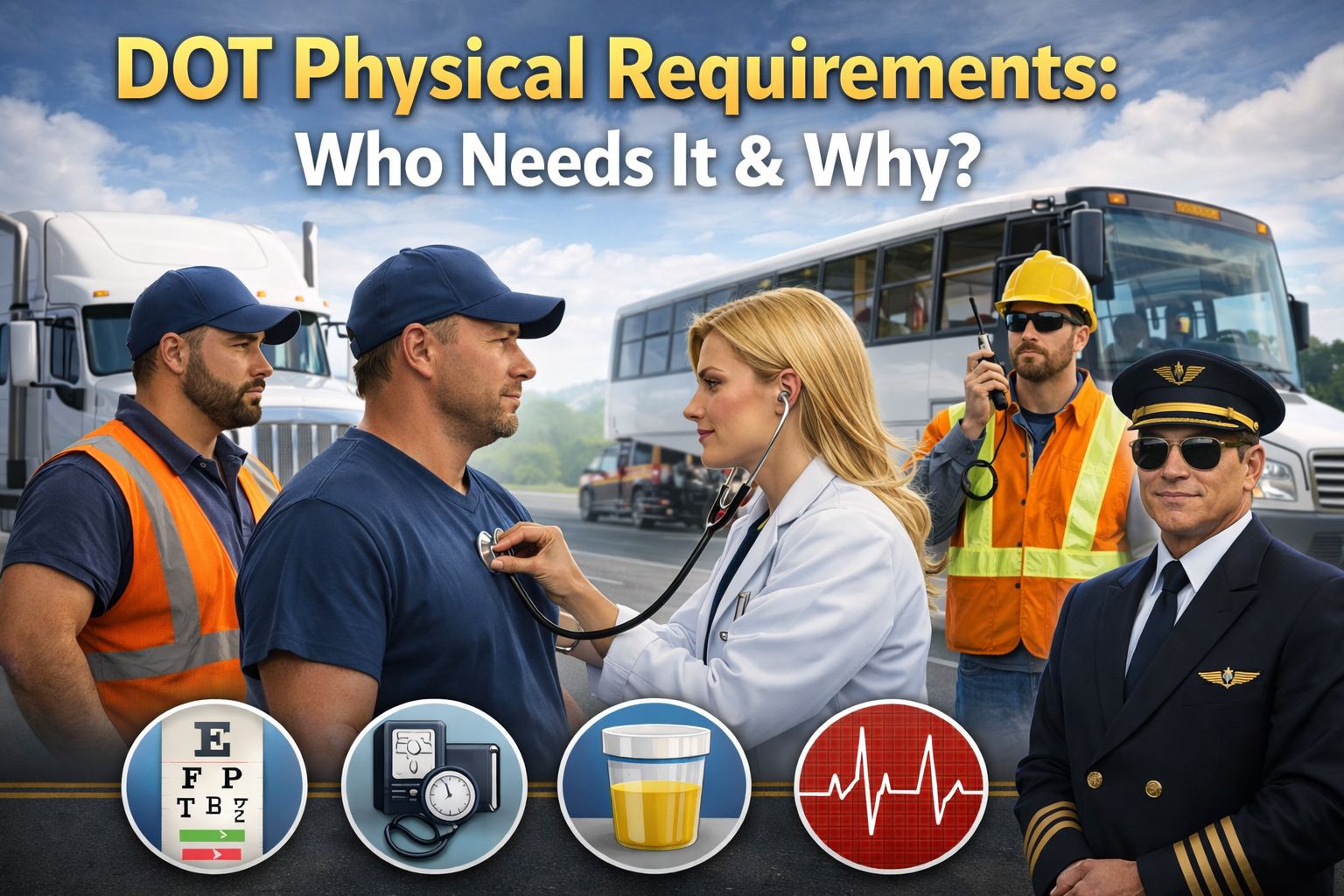
A DOT physical or Department of Transportation physical, is a type of exam for drivers to ensure they meet a standard to drive on the road. It’s just a part of US law. But those who are already driving or planning to do this, the physical exam confuses them a lot. They don't have a clear understanding of the DOT physical exam. And this lack of information becomes a hurdle that restricts them from getting their DOT card. Most of the drivers ask: Do I really need one? What’s involved? And why is it such a big deal?
All these answers are important to know for the drivers so they can pass their exam easily. So let’s discuss and understand DOT physical requirements, who needs them, and why they matter so much for your career and safety.
What is the DOT Physical Exam?
You must know that a DOT physical exam is a health check required by the Department of Transportation (DOT) to make sure commercial drivers are physically and mentally fit to operate a commercial motor vehicle (CMV).
But do you already know that this exam is not just for the standard checkup you usually expect?
Most people think it only includes vision and blood pressure tests; the DOT physical also screens for sleep disorders, cardiovascular risks, and even certain neurological conditions that could impact driving safety.
This exam is conducted by a certified medical examiner who’s listed on the Federal Motor Carrier Safety Administration (FMCSA) registry. They will also check reaction times and motor function and if you pass, you’ll receive a Medical Examiner’s Certificate (DOT card), which is your green light to drive commercially.
And the process is not just finished on the results of saying simple pass or fail. The DOT keeps a detailed record of your medical history, medications, and past exam outcomes, which can influence future renewals.
Why DOT Physicals Matter More Than You Think
One thing that US residents need to understand is that driving a commercial vehicle isn’t like driving your personal car. Both are two different things. If you are driving a commercial vehicle, you are dealing with:
-
Long hours on the road
-
Heavy vehicles
-
High-risk conditions like weather, traffic, and fatigue
During these situations, even a small health issue can turn into a serious hazard. That’s why it’s not just a rule that becomes harder for drivers but it’s more about the safety of people. With the help of DOT physicals, you can find those problems that can become dangerous for you. A DOT physical exam keeps you safe, protects others and reduces accidents. And if you want the best option for DOT physical, then iMed urgent care in Columbus and Grove City is always the right choice for you. Our FMCSA-registered providers have been performing DOT Physical exams for years and better understand how to fulfil the requirements of this test and how to make this process simple for you.
Who Needs a DOT Physical?
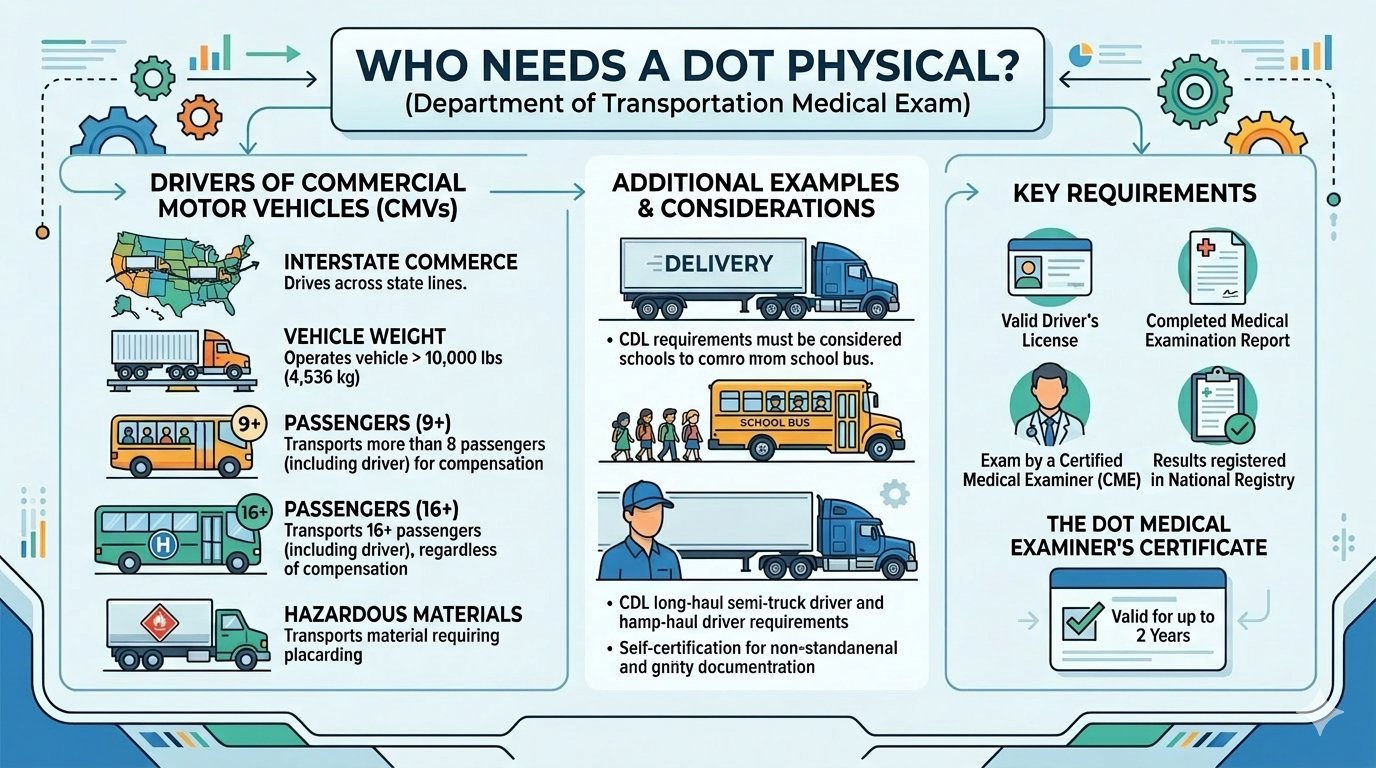
Now the main question is here. So let’s tell you, not every driver needs a DOT physical but if you fall into any of the categories below, you likely do.
Commercial Drivers (CDL Holders)
If you hold a Commercial Driver’s License (CDL) and operate vehicles like:
-
Semi-trucks
-
Buses
-
Tankers
-
Tractor-trailers
You are required to pass a DOT physical.
Drivers of Heavy Vehicles
Even if you don’t have a CDL, you still need a DOT physical if your vehicle:
-
Has a gross vehicle weight rating (GVWR) of 10,001 pounds or more
-
Transports hazardous materials
-
Carries more than 8 passengers for compensation or 15 without
Interstate Drivers
If you drive across state lines for work, then DOT regulations also apply to you. That means a DOT physical is not optional; it’s mandatory.
Certain Intrastate Drivers
Some states require DOT physicals even for drivers who stay within state lines. It depends on local regulations, but many employers still require it as a safety standard.
Who Might Be Exempt?
Not everyone falls under DOT rules. You also don't need a DOT physical if:
-
You drive a personal vehicle only
-
Your job doesn’t involve commercial driving
-
You operate smaller vehicles below the weight threshold
-
You’re a government employee in certain roles
-
You’re an emergency responder in some cases
Still, if you have any confusion, then you can double-check with your employer or a certified medical examiner.
What Does a DOT Physical Include?
Let’s clear up another confusion. As some people don't have an idea about the process and they start to imagine something way more intense than it is. At iMed Urgent Care in Ohio, we make every step simple and clear for you.
Step 1: Health History Discussion
After reviewing your paperwork, our qualified examiner will ask about your medical history.
-
Have you ever felt dizzy or fainted?
-
Do you use any drugs at the moment?
-
Do you have a history of lung or heart problems?
These questions are crucial to estimating your total risk level.
Step 2: Vital Signs Check
-
Blood pressure
-
Pulse rate
-
Height and weight
These numbers help identify your cardiovascular health.
Step 3: Urinalysis
It’s not a drug test but requires one separately. It helps to check:
-
Kidney Health
-
Blood sugar levels
-
Signs of underlying medical issues
Step 4: Vision & Hearing Tests
It is required to have 20/40 vision in each eye with or without glasses and must have the ability to distinguish traffic signal colors. If you wear glasses or contacts, bring them with you. Then your hearing ability is checked, and you must have heard a forced whisper from at least 5 feet away or pass an audiometric test. This is an important test as sirens, horns, and road alerts matter for the safety of people.
Step 5: Full Physical Examination
Our professional examiner will:
-
Listen to your heart and lungs
-
Check your abdomen
-
Observe your posture and walking pattern (gait)
-
Test reflexes
They’re essentially asking:Can this person safely handle long hours behind the wheel?
The Hidden Paperwork Most Drivers Forget
Many drivers get delayed, not because they fail, but because they don’t bring the right documents. If you choose iMed Urgent Care for a DOT physical exam, our cooperative staff will guide you first on each required document. But here are some important forms you should know about.
Medical Examination Report Form (The Big One)
This is the main DOT form that includes:
-
Your health history
-
A checklist of symptoms and conditions
-
Space for additional explanations
Fill this out before the time of your appointment. It reduces stress levels and saves time.
Vision Evaluation Report
If your vision doesn’t fully meet DOT standards, this form becomes important.
-
Completed by your eye doctor (optometrist or ophthalmologist)
-
Confirms your ability to safely drive
-
Must be done within 45 days of your exam
Insulin-Treated Diabetes Assessment Form
If you use insulin, then this form is required. Your healthcare provider will include:
-
When you started insulin
-
Your blood sugar management routine
-
Recent A1C levels
-
Any complications
Without this form, your certification could be delayed.
CMV Driver Medication Form
This is mostly common among drivers. If you’re taking medications that could affect driving:
-
The examiner can request this form after your exam
-
Your doctor must confirm the medication is safe
Condition-Specific Documents You Should Bring
If you have any of these conditions, you should bring them instead of wasting appointments due to the absence of these documents.
Diabetes
-
Bring your most recent A1C results
Sleep Apnea
-
Bring a 3-month CPAP compliance report
Blood Thinners (like warfarin)
-
Bring a recent INR lab result
These small details can save you from delays, repeat visits, or temporary disqualification.
What Type of Results Do You Get From a DOT Physical?
Most people think it’s just “pass or fail” but it’s not. The results of a DOT Physical vary depending on your physical fitness.
Fully Certified (2-Year Certificate)
This is the best-case scenario.
If you're in good health and meet all federal requirements, you'll get away with a 2-year Medical Examiner’s Certificate. No follow-ups needed and no extra paperwork.
Limited Certification
This is more common than you think.
If you have manageable conditions like:
-
Mild high blood pressure
-
Controlled diabetes
-
Slight vision concerns
You then receive:
-
1-year certification
-
6-month certification
-
Temporary 3-month certificate
This just means the examiner wants to monitor your condition more closely.
Pending / Temporary Hold
Sometimes, the examiner needs more information before making a final decision.
For example:
-
You’re on specific medications
-
Your blood pressure is borderline
-
You need additional documentation
In this case, your result is “pending”, and you’ll need to submit forms or return for a follow-up.
Not Certified (Temporarily Disqualified)
Don’t panic, this isn’t permanent. If you fail once, it usually means that:
-
A condition needs treatment
-
Your blood pressure is too high
-
Required documents are missing
Once you address these issues, you can retake the DOT physical and get certified.
Why Drivers in Columbus & Grove City, Ohio Choose iMed Urgent Care
All the drivers first want convenience with accuracy. That’s why so many drivers in Columbus and Grove City, Ohio, turn to iMed Urgent Care. Our certified DOT medical examiners know what’s required and will guide you through each process. Our urgent care center is walk-in friendly so you can visit without any long waitlists or scheduling ahead. Our main focus is to provide you with fast and same-day results so you can bring your DOT medical card in hand when you leave. Whether you live in East Columbus, South High Columbus, or Grove City, you’re never far from a trusted DOT exam provider. So without wasting your time in other busy centers, just visit iMed Urgent Care and take the right step for your career.

Created by DearDoc.
iMed Urgent Care © All right reserved.