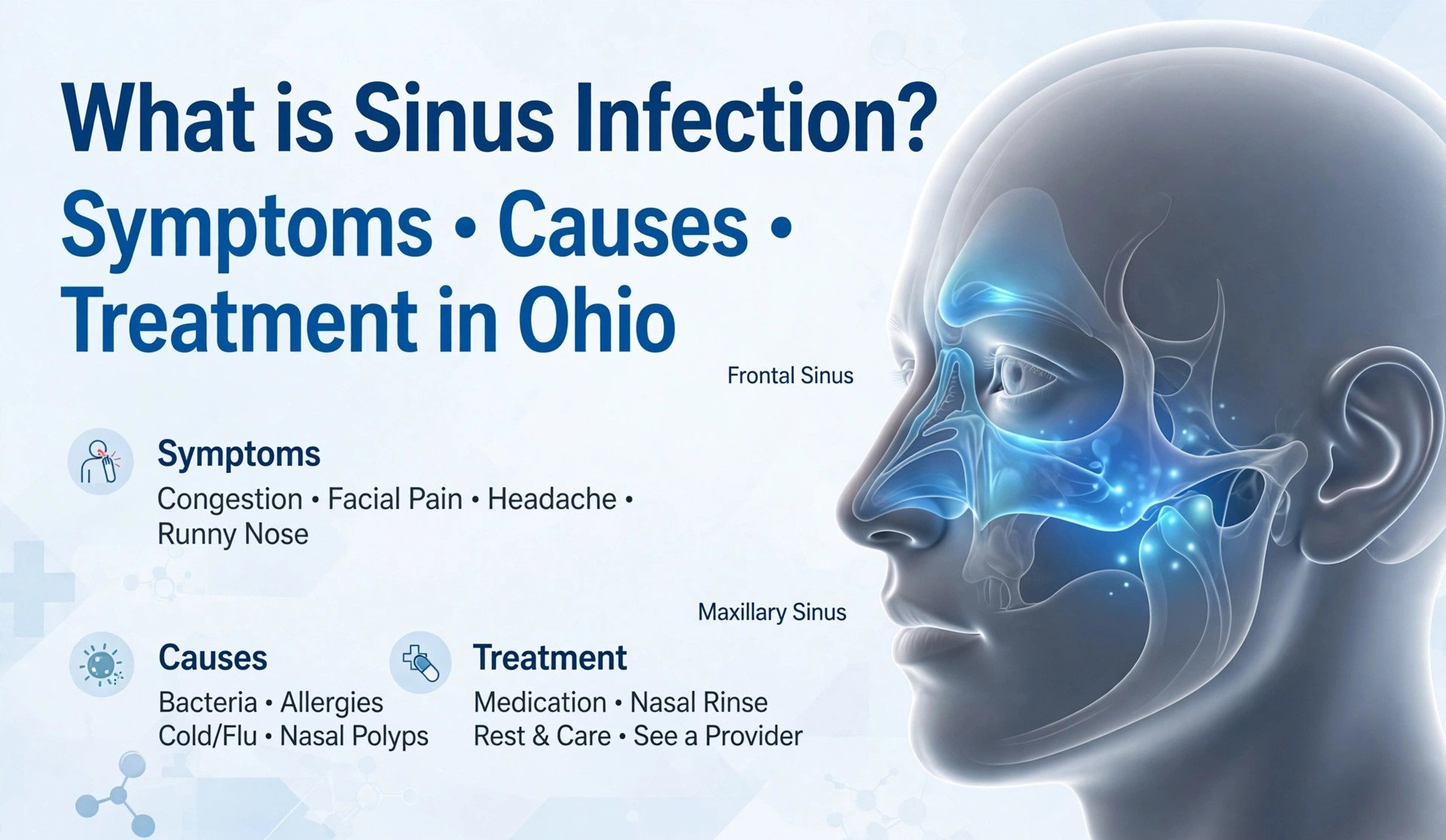
Sinus infections, clinically known as sinusitis or rhinosinusitis, affect tens of millions of Americans every year, and Ohio residents especially face this condition due to the state's prolonged pollen seasons, humid climate, and geography. Sinuses are the spaces in your face, like the forehead, nose, and cheeks, that are filled with air. You can feel facial pressure, a stuffy nose, and a headache as the season moves. If a sinus infection is diagnosed early, it can save you from a lot of complications and it can be effectively treated. So let’s discuss what a sinus infection is, why it happens, and how to get proper treatment, whether you are in Columbus, Grove City, or anywhere else in Ohio.
What Is a Sinus Infection?
A sinus infection occurs when the tissue lining your sinuses becomes inflamed or swollen.
Your sinuses are hollow air-filled spaces located behind your forehead, cheeks, eyes, and nose. Under normal circumstances, they produce mucus that helps trap dust, bacteria, allergens, and other particles before they enter your lungs.
When the sinuses become blocked, mucus can't drain properly. This creates an environment where viruses, bacteria, or fungi can grow, leading to infection and inflammation. And it starts feeling congested, with facial pressure, headaches, and a host of other uncomfortable symptoms.
Sinusitis is one of the most common medical conditions in the United States. More than 30 to 37 million Americans are diagnosed with sinus infections every year, making it a leading reason for both primary care and ENT (ear, nose, and throat) visits.
Types of Sinus Infections
Not all sinus infections are the same. Healthcare providers generally classify them based on how long symptoms last and what’s causing them.
Acute Sinusitis
Acute sinusitis develops rapidly and takes less than four weeks. This is the most common type, usually triggered by a viral upper respiratory infection like the common cold. Most cases resolve on their own within 7–10 days without antibiotics.
Subacute Sinusitis
Subacute sinusitis lasts between four and twelve weeks. This is a transitional stage because the infection hasn't fully cleared but isn't yet considered chronic. Bacterial causes become more likely at this stage.
Chronic Sinusitis
Chronic sinusitis persists for more than twelve weeks, even with treatment. Chronic sinusitis often has an underlying cause such as allergies, nasal polyps, a deviated septum, or immune dysfunction. That’s why most ENT referrals happen here.
Recurrent Sinusitis
The patient experiences four or multiple episodes per year. That’s why it is known as recurrent sinusitis. Each episode lasted fewer than two weeks. For Ohio allergy sufferers, recurrent sinusitis during multiple pollen seasons is extremely common.
Viral Sinusitis and bacterial
After COVID, a lot of viruses are generated that cause common colds, influenza, or other upper respiratory viruses and lead to sinusitis.
Bacterial sinusitis most commonly occurs when a viral sinus infection fails to clear, and bacteria, which are normally present in the nasal passages, seize the opportunity created by impaired drainage and a weakened local immune system.
Fungal sinusitis
Fungal sinusitis is far less common than viral or bacterial sinusitis but it is more serious, more difficult to treat, and frequently misdiagnosed because its early symptoms can closely resemble those of other sinusitis types. Fungal sinusitis develops when this immune defense is compromised or, in some forms, when the immune system mounts an exaggerated allergic response to fungi. In Ohio, where humidity, mold, and agricultural exposures are prevalent, awareness of fungal sinusitis is especially important.
Sinus Infection Symptoms
Sinus infection symptoms can be like a cold or allergies, which is why many cases go undiagnosed or are improperly treated. Some common symptoms of sinus infections include:
Primary Symptoms
-
Facial pain and pressure: especially around the forehead, cheeks, eyes, and nose bridge
-
Nasal congestion: a stuffy, blocked nose that won't clear
-
Thick nasal discharge: yellow, green, or cloudy mucus
-
Post-nasal drip: mucus draining down the back of the throat
-
Reduced or absent sense of smell and taste
Secondary Symptoms
-
Headache (often worse in the morning or when bending forward)
-
Fatigue and general malaise
-
Cough, especially at night from post-nasal drip
-
Sore throat from drainage
-
Bad breath (halitosis) from infected mucus
-
Dental pain, particularly in the upper teeth (caused by maxillary sinus pressure)
-
Low-grade fever (more common in acute bacterial sinusitis)
-
Ear fullness or pressure
Common Causes of Sinus Infections
Some common causes of sinusitis are allergens, bacteria, fungi and viruses. Some others include:
-
Nasal polyps are noncancerous growths that can block normal airflow and drainage.
-
A crooked nasal septum can restrict sinus drainage and contribute to recurrent infections.
-
Exposure to cigarette smoke, pollution, chemical fumes, and other irritants can inflame sinus tissues.
-
Streptococcus pneumoniae is a bacterium responsible for bacterial sinus infections, especially when symptoms persist or worsen after a cold.
-
Haemophilus influenzae can lead to nasal congestion, facial pain, and thick mucus buildup.
-
Moraxella catarrhalis is a bacterium that is particularly common in children, though it can also affect adults.
Why Sinus Infections Are Common in Ohio
Ohio's climate creates some conditions that can increase sinus problems throughout the year.
-
Seasonal Allergies: Spring and fall bring high pollen levels that can trigger inflammation and congestion.
-
Cold Winters: Dry indoor air and winter respiratory illnesses often contribute to sinus irritation.
-
Temperature Fluctuations: Ohio weather can change dramatically within a short period, affecting sinus pressure and mucus production.
-
Increased Respiratory Illnesses: Cold and flu season frequently leads to secondary sinus infections.
How Sinus Infections Are Diagnosed
Most acute sinus infections are diagnosed based on your symptoms, duration, and a physical examination.
Primary Care Visit
For simple acute sinusitis, your doctor will check your symptoms, examine your nose, and review your history of allergies, previous infections, and risk factors.
Nasal Endoscopy
An ENT (Ear, Nose, and Throat) doctor performs nasal endoscopy for complicated or persistent illnesses. This procedure involves inserting a thin and flexible scope into the nostril to directly view the sinus openings, detect polyps, look for structural issues, and assess the level of inflammation.
CT Scan of the Sinuses
Computed tomography (CT) scan is the best standard for evaluating structural abnormalities, possible problems, and chronic sinusitis because it provides the most comprehensive images of sinus anatomy. It is typically saved for patients who have not responded to previous treatment or who are being evaluated for surgery.
Allergy Testing
Allergy testing, either skin prick tests or blood tests, can identify particular allergens for people with chronic or recurrent sinusitis. It makes it possible to use avoidance techniques or immunotherapy for targeted management.
Cultures
Your doctor can occasionally culture nasal secretions to identify the specific organism and choose the best medication, particularly if antibiotic-resistant bacteria are suspected or if infections continue to reoccur.
Sinus Infection Treatment Options
Treatment depends on what type of sinusitis you have, how severe it is, and what's causing it.
For Acute Viral Sinusitis
Since viruses don't respond to antibiotics, the focus is on managing symptoms while your immune system clears the infection:
-
Mucus and allergens can be removed from the nose with saline nasal rinses (using a neti pot or squeeze bottle).
-
Oral decongestants or nasal sprays can help clear a blocked nose. But remember never use nasal sprays for longer than three days.
-
Acetaminophen and ibuprofen are examples of painkillers that can help reduce headaches and face pain.
-
When allergies are present, steroid nasal sprays like fluticasone or budesonide can help relieve swelling.
-
Mucus can be released by adding moisture to the air or using a humidifier.
-
You can get temporary relief by inhaling steam from a hot shower or bowl of warm water.
For Bacterial Sinusitis
If symptoms have lasted longer than 10 days without improvement, worsened after initial improvement, or are severe, with high fever and intense facial pain, bacterial sinusitis can be present. In these cases:
-
Antibiotics: Amoxicillin-clavulanate is typically the first choice. The full course (usually 5–10 days) should be completed. The CDC emphasizes that antibiotics are frequently overprescribed for sinusitis.
-
Corticosteroid nasal sprays: continued to reduce underlying inflammation
-
Short-course oral corticosteroids: occasionally prescribed for severe cases or significant polyp-related obstruction.
For Chronic or Recurrent Sinusitis
-
Allergy management: If allergies are contributing, immunotherapy can reduce the immune response over time, breaking the cycle of inflammation and infection.
-
Biologic medications: newer injectable biologics (such as dupilumab) are now approved for chronic sinusitis with nasal polyps and have shown strong results in clinical trials.
-
Functional Endoscopic Sinus Surgery (FESS): a minimally invasive procedure performed through the nostrils that widens the sinus openings to restore drainage.
-
Balloon sinuplasty: a less invasive office-based procedure for select patients in which a small balloon is inflated inside the sinus opening to expand it, similar in concept to a cardiac angioplasty.
-
Long-term nasal corticosteroid therapy.
-
Saline rinses as a daily maintenance routine.
For Fungal Sinusitis
For fungal sinusitis, antibiotics will not help. Antifungal medications are required and surgical debridement can be needed in more invasive cases.
Get Fast Sinus Infection Treatment at iMed Urgent Care
A sinus infection can make even routine everyday tasks feel exhausting. You don't have to deal with headaches, persistent drainage, congestion, or face pressure alone. If you are in Ohio then your best healthcare partner iMed Urgent Care is here for you. Our experienced medical team provides quick evaluation and treatment for sinus infections and other common illnesses. We offer convenient walk-in care, shorter wait times, and personalized treatment plans to help you feel better as quickly as possible.
If your symptoms aren't improving or you're concerned about a possible sinus infection, visit iMed Urgent Care today and get the relief you deserve.