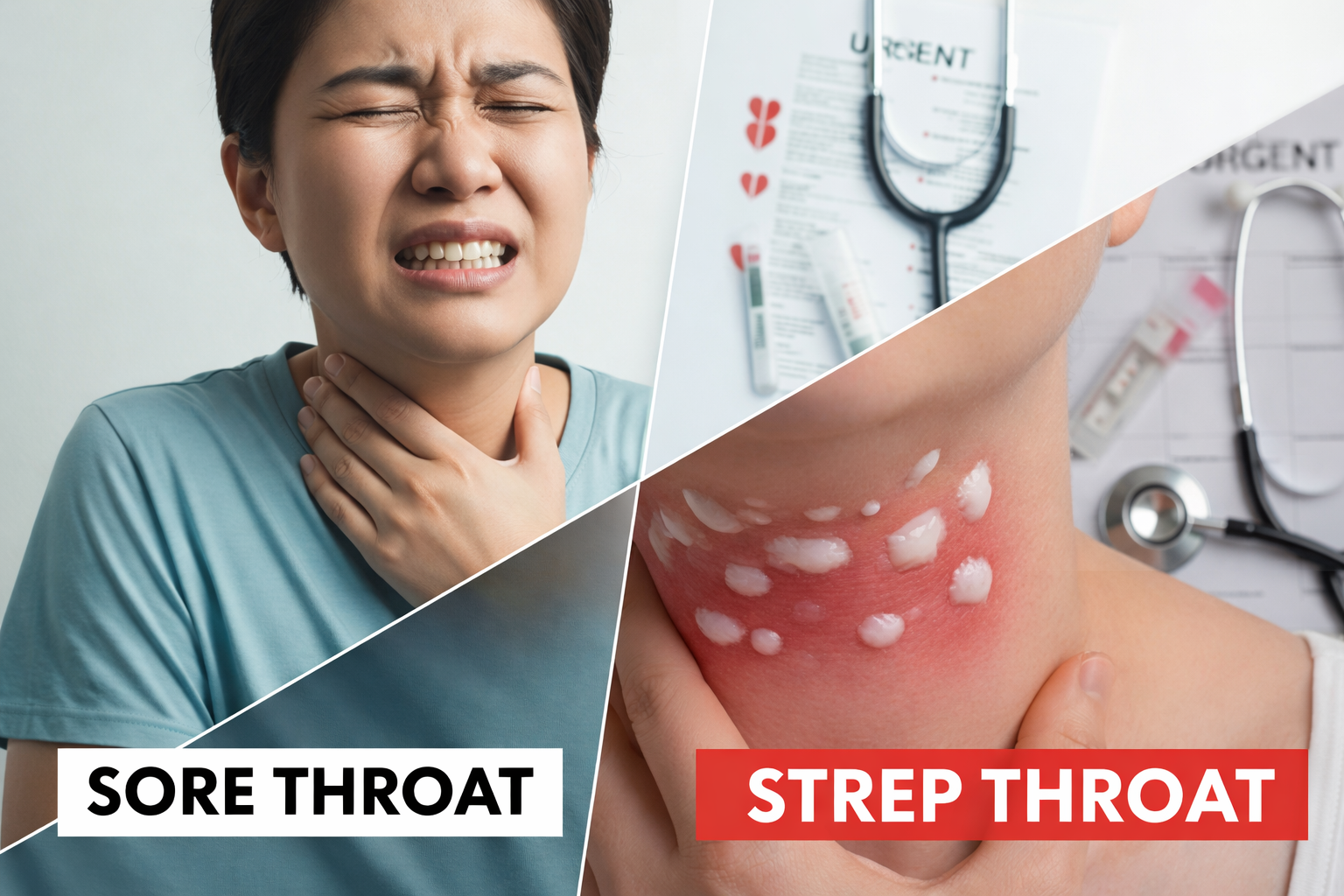
A sore throat is a common disease that makes you feel like you are getting sick. One minute you’re fine, and the next moment it hurts to swallow, talk, or even breathe through your mouth. You feel scratchy, burn, or feel like you’re swallowing glass.
But you need to know that not all sore throats are the same, and not all of them need antibiotics. Some are mild and annoying. Others, like strep throat, can disrupt your whole day if left untreated. That’s why people visit urgent care, especially during cold and flu season. At iMed Urgent Care in Ohio, sore throats are one of the most common reasons patients walk through our doors. The major reason to visit us is quick testing, same-day treatment, and no long waits that disturb your schedule.
Let’s discuss in detail what causes a sore throat, how strep throat is different, when to go to urgent care for sore throat, what strep throat test urgent care uses, and what treatment actually looks like when you walk through the door.
What Is a Sore Throat?
A sore throat isn’t a diagnosis; it’s a symptom. And there are plenty of things that can cause it. But most sore throats are linked to viral infections, so antibiotics won’t help. It’s your body’s way of saying something isn’t quite right.
Common causes of sore throats include:
-
Cold and flu viruses
-
COVID-19
-
Seasonal allergies
-
Sinus infections
-
Postnasal drip
-
Dry air or dehydration
-
Smoking or vaping
-
Acid reflux (GERD)
-
Bacterial infections like strep throat
Most sore throats, especially viral ones, will clear up on their own. But some don’t, and that’s when it’s time to stop guessing and get checked.
What Is Strep Throat?
Strep throat is a bacterial infection in the throat and tonsils caused by Group A Streptococcus. Unlike viral sore throats, strep usually requires antibiotics to fully clear the infection and prevent complications. It tends to come on fast and is more difficult to bear. Strep also doesn’t usually come with a runny nose or cough.
Classic strep throat symptoms:
-
Sudden and severe throat pain
-
Painful swallowing
-
Fever (often over 101°F)
-
Red, swollen tonsils
-
White patches or streaks of pus on the tonsils
-
Swollen lymph nodes in the neck
-
Headache or body aches
-
Nausea or vomiting (especially in kids)
Sore Throat vs. Strep Throat: How Can You Tell the Difference?
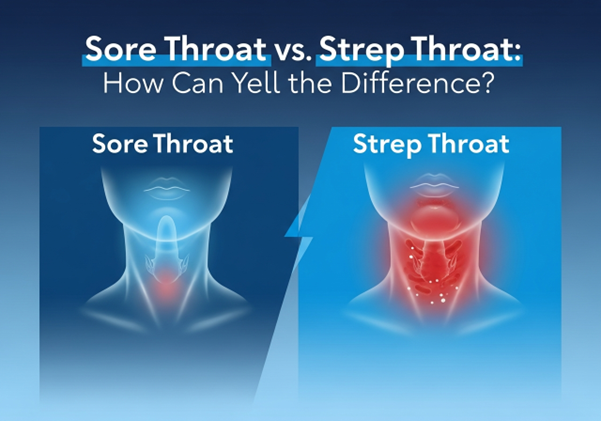
Very few people can differentiate it and sometimes you can’t. Even experienced providers won’t rely on symptoms alone, because viral and bacterial sore throats mostly overlap. That’s why testing is required to differentiate sore throat and strep throat.
Viral sore throat clues:
-
Runny or stuffy nose
-
Cough
-
Hoarseness
-
Mild fever or no fever
-
Gradual onset
Strep throat clues:
-
Sudden and intense throat pain
-
Fever without cold symptoms
-
Swollen glands
-
No cough
If you’re unsure or if you think symptoms are lined up more with strep and your sore throat isn’t improving, urgent care testing is the fastest way to get clarity.
When Should You Go to Urgent Care for a Sore Throat?
A mild sore throat that improves in a couple of days usually isn’t a big deal. But in some situations, you need medical attention.
You should visit iMed Urgent Care if:
-
Your sore throat lasts longer than 3–4 days
-
You have a fever along with throat pain
-
Swallowing is painful or difficult
-
You see white patches on your tonsils
-
You have swollen lymph nodes
-
Symptoms came on suddenly and severely
-
A child has throat pain plus stomach pain or vomiting
-
You’ve been exposed to someone with strep throat
Walk-in urgent care sore throat is perfect here, faster than an ER and more convenient than waiting days for a primary care appointment.
What Happens at Urgent Care for a Sore Throat?
One of the biggest concerns patients have is not knowing what to expect. Don't worry, a sore throat treatment at urgent care is usually quick and straightforward, where you’ll get all your answers.
Medical History & Symptom Review
Your provider will ask about:
-
When symptoms started
-
Whether you’ve had a fever
-
Any cough or congestion
-
Recent exposure to illness
-
Past history of strep or tonsillitis
Physical Exam
Next, the provider will:
-
Look at your throat and tonsils
-
Check for redness, swelling, or white patches
-
Feel your neck for swollen lymph nodes
-
Take your temperature
Rapid strep testing (when needed)
Based on what they see, if strep throat is suspected, a rapid strep test is usually recommended. It’s a simple throat swab, over quickly and minimally uncomfortable.
Strep Testing at iMed Urgent Care
At iMed Urgent Care in Ohio, our in-house lab services enable patients to get strep throat testing without going to outside labs.
Rapid Strep Test
This is the most common test used in iMed Urgent Care.
-
A swab is gently rubbed along the back of your throat
-
Results are usually ready in 5–10 minutes
-
Highly specific for strep bacteria
If the test is positive, our providers will start treatment right away.
Throat Culture When Needed
In some cases, especially with children, a throat culture can be sent to a lab if:
-
The rapid test is negative
-
Symptoms strongly suggest strep
In this process, results take longer but this ensures nothing is missed.
Additional testing if needed
Depending on your symptoms, our providers can also recommend:
-
COVID-19 testing
-
Flu testing
-
Mono testing, especially for teens and young adults
Everything happens in one visit; you don't need to run to labs and get results without waiting days.
What If the Strep Test Is Negative?
In most cases, this happens. A negative strep test usually means your sore throat is viral, which means:
-
Antibiotics are not needed
-
The infection should clear on its own
-
Treatment focuses on symptom relief
Our providers will explain what’s causing your symptoms and how to feel better while your body does its thing.
Strep Throat Treatment at Urgent Care
If your test is positive for strep throat, treatment is simple and effective.
Antibiotics
-
Antibiotics are usually penicillin or amoxicillin
-
Provide you with guidance on pain relief and fever control
-
Give instructions on when it’s safe to return to work or school
Most people start feeling better within 24–48 hours after starting Strep throat antibiotics. And finishing the full course is important here, even if you feel fine after two days. Treating strep promptly also helps prevent complications like:
-
Rheumatic fever
-
Kidney inflammation
-
Ear or sinus infections
Treatment for Viral Sore Throats
If your sore throat isn’t strep, iMed Urgent Care, Ohio still helps you in a different way.
Symptom relief includes:
-
Prescription or OTC pain relievers
-
Throat lozenges or sprays
-
Anti-inflammatory medications
-
Hydration recommendations
-
Rest guidance
You’ll also get advice on what symptoms to watch for and when to come back if things don’t improve.
How Long Does a Sore Throat Last?
-
Viral sore throat: 3–7 days
-
Strep throat: Improvement within 1–2 days of antibiotics
-
Untreated strep: Can last longer and cause complications
If symptoms are getting worse instead of improving, then you need to recheck them.
Are Sore Throats Contagious?
Some are, and some aren’t.
-
Viral infections are often contagious
-
Strep throats are very contagious until antibiotics are started
Once you’ve been on antibiotics for 24 hours and are fever-free, you’re usually no longer contagious.
Preventing Sore Throats and Strep Throat Tips
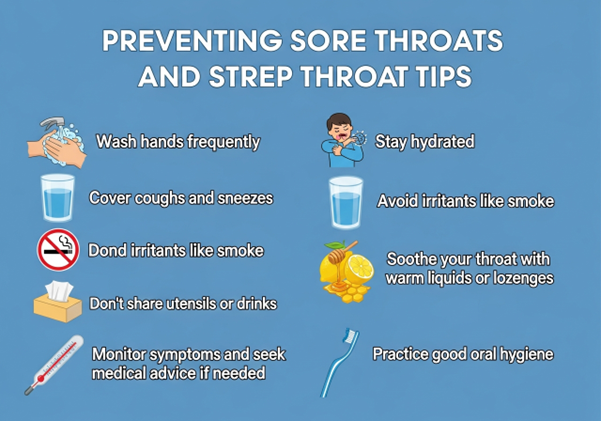
While you can’t avoid every minor illness, a few habits can lower your risk:
-
Wash hands frequently
-
Avoid sharing drinks or utensils
-
Replace toothbrushes after strep infection
-
Stay hydrated
-
Manage allergies
-
Avoid smoking or vaping
Small steps can make a big difference.
Why Choose iMed Urgent Care for Sore Throat and Strep Testing?
When your throat hurts, the last thing you want is a long wait or uncertainty.
At iMed Urgent Care, Ohio, patients in East Columbus, South High Columbus, and Grove City appreciate:
-
Walk-in availability
-
Fast strep testing
-
On-site treatment
-
Experienced medical providers
-
Care for adults and children
-
Clear explanations without complicated terms
You get answers, treatment, and peace of mind, all in one visit.