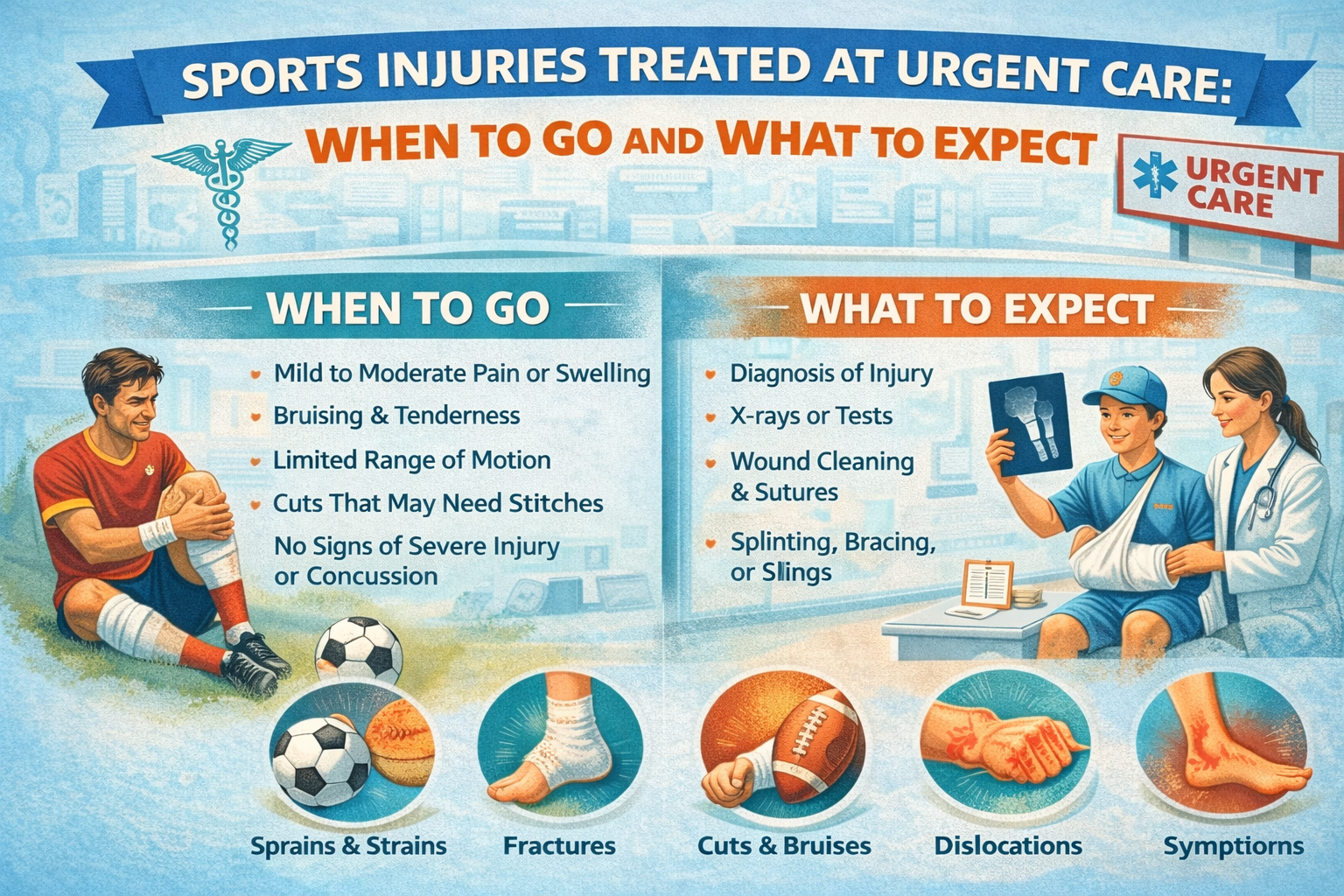
From the earliest days of organized competition to modern athletics, sports injuries have always been a reality. It can happen anytime and anywhere, even when you make a wrong step, an awkward landing, or a sudden twist. When you start playing hard, training consistently, or even joining weekend games, injuries are common. When players get affected after practice or a game, their first concern is the right and quick treatment. That’s why they get confused and ask themselves:
Is this serious enough for the ER? Can I wait to see my primary care doctor? Or should I head to urgent care?
In severe cases, people prefer the emergency room but in non-life-threatening conditions, there is a fast, affordable and best solution people can take is urgent care centers. Let’s discuss what sports injuries urgent care can treat, when you should go, and what to expect during your visit.
Why Urgent Care Is a Smart Choice for Sports Injuries
Sports injuries are incredibly common, especially in active communities like Columbus and Grove City. but all injuries are not the same. Some are minor and some are severe. Just like not every injury needs an emergency room. In fact, many sports-related injuries are non-life-threatening but still need quick medical attention. That’s where you should choose urgent care centers.
One of the biggest advantages of visiting urgent care for a sports injury is convenience. You don’t need an appointment, and you won’t wait days to see your primary care provider. Urgent care centers offer:
-
Same-day treatment
-
On-site X-rays
-
Walk-in appointments
-
Extended evening and weekend hours
-
Affordable self-pay options
If you’re searching online for “urgent care for sports injuries near me” or “walk-in clinic for sprained ankle in Ohio”, you’ll find the urgent care that you need at that time.
Common Sports Injuries Treated at Urgent Care
People also have confusion about whether their injury is treated at urgent care or not. So let’s clear it and see the most common sports injuries:
Sprains and Strains
Sprains and strains are probably the most frequent sports injuries we see.
-
Sprains mean stretched or torn ligaments like ankle sprains.
-
Strains affect muscles or tendons like a pulled hamstring.
In this situation, you can feel:
-
Swelling
-
Bruising
-
Pain with movement
-
Limited range of motion
People try to tough it and hope that it will improve with rest and ice. Sometimes it does. But if you can still move the joint but it hurts, urgent care is the best option for you. Providers examine the injury, possibly perform an X-ray to rule out fractures, and create a treatment plan according to your health needs.
Minor Fractures and Suspected Broken Bones
If your bone has broken, you don't need to go to the ER.
If the bone isn’t sticking out of the skin and there’s no severe deformity, urgent care can often evaluate and treat it.
You can get:
-
On-site digital X-rays
-
Splinting and bracing
-
Pain management
-
Orthopedic referrals if needed
Dislocations (Stable and Non-Severe)
Dislocations, especially fingers and shoulders are common in contact sports and basketball.
If your joint looks out of place but circulation isn’t compromised and there’s no severe trauma, urgent care is able to evaluate and manage it safely. But severe dislocations with nerve damage or extreme pain always need emergency care. So when you have any doubt, you can call ahead.
Tendonitis and Overuse Injuries
Not all sports injuries happen suddenly. Some started over time. Some common overuse injuries include:
-
Tennis elbow
-
Golfer’s elbow
-
Runner’s knee
-
Achilles tendonitis
If you have been hurting with the pain and it won't go away, Urgent care can assess the area, provide treatment, and assist you in preventing the pain from getting worse.
Cuts, Lacerations, and Abrasions
Cuts and lacerations are also common in sports, especially in soccer, basketball, baseball, and cycling. Sliding on turf or pavement can leave deep scrapes. Collisions can result in cuts that may require stitches.
Urgent care centers like iMed Urgent Care provide:
-
Wound cleaning
-
Stitches or skin adhesive
-
Tetanus shots
-
Infection prevention guidance
If it’s bleeding heavily and won’t stop, go to the ER. Otherwise, urgent care is usually perfect for sports-related lacerations.
Mild Concussions
Head injuries deserve special attention. Mild concussions can occur in contact sports or after falls. If there’s no loss of consciousness, no repeated vomiting, and no severe neurological symptoms, urgent care can evaluate the injury.
Providers will evaluate:
-
Balance
-
Memory
-
Neurological signs
-
Headache severity
However, if symptoms are severe or worsening, the ER is the right place. Safety always comes first.
When to Go to Urgent Care for a Sports Injury
One of the most common questions patients ask is, “How do I know if I should go to urgent care or the ER?”
Go to urgent care if the injury is painful but stable.
Choose urgent care for:
-
Swelling without deformity
-
Possible minor fractures
-
Sprains and strains
-
Minor dislocations
-
Cuts needing stitches
-
Mild head injuries
-
Sports-related infections
Now, where can you find urgent care centers? Search terms including:
-
Sports injury clinic near me
-
Walk-in clinic for broken bone
-
Urgent care for ankle sprain in Ohio
-
Same-day sports injury treatment
When You Should Go to the Emergency Room Instead
Urgent care isn’t for life-threatening injuries. Head to the ER if you notice:
-
Bone protruding through skin
-
Severe deformity
-
Loss of consciousness
-
Heavy, uncontrolled bleeding
-
Numbness or loss of circulation
-
Severe head trauma
How Much Does Urgent Care for Sports Injuries Cost?
Cost is a huge factor for families and athletes. Emergency room visits can be extremely expensive, even for minor injuries.
Urgent care visits are typically:
-
Much cheaper than ER visits
-
Covered by most major insurance plans
-
Affordable for self-pay patients
If you’re worried about pricing, our front desk team can provide guidance before your visit and can help verify your benefits so there are no surprises.
What to Expect at iMed Urgent Care for a Sports Injury
At iMed Urgent Care, we see sports injuries every single day. From sprained ankles and torn ligaments to minor fractures and muscle strains, our team helps athletes of all ages get fast, reliable treatment without the long wait times or sky-high emergency room bills. If you’ve never visited urgent care for a sports injury, let’s show you the whole process.
Walk In or Check In Online
We provide convenient walk-in urgent care in East Columbus, South High Columbus, and Grove City, so you don’t need an appointment. Our certified provider will first check in to assess the affected area.
Evaluation and Exam
After check-in, one of our medical providers will:
-
Ask how the injury happened
-
Check the range of motion
-
Assess swelling and tenderness
-
Determine whether imaging is needed
Immediate Treatment
Once we have a clear diagnosis, we’ll provide treatment immediately. Depending on your injury, we can:
-
Apply a splint or brace
-
Provide crutches
-
Prescribe medication
-
Clean and stitch wounds
-
Recommend physical therapy
Clear Aftercare Instructions
Before you leave, you’ll receive detailed aftercare instructions so you know exactly how to support your recovery at home, including:
-
How long to rest
-
When to ice or elevate
-
Warning signs to watch for
-
When to follow up
Sports Physicals and Injury Prevention
At iMed Urgent Care, we also offer sports physicals in Columbus, South High Columbus, and Grove City. These exams help detect potential issues before the season even starts.
Preventive care can reduce:
-
Overuse injuries
-
Undiagnosed conditions
-
Sudden complications
If your child or teen needs a sports physical for school, iMed urgent care makes it quick and easy.
Youth Sports Injuries: What Parents Should Know
Kids and teens are especially prone to:
-
Growth plate injuries
-
Ankle sprains
-
Wrist fractures
-
Concussions
If your child limps, refuses to use a limb, or complains of persistent pain, urgent care is a smart first step.
Early treatment can prevent long-term complications.
Why Choose iMed Urgent Care for Sports Injuries?
We’re not just another walk-in clinic. Patients prefer us because:
-
Experienced providers trained in musculoskeletal injuries
-
Short wait times
-
Friendly, compassionate staff
-
Convenient Columbus and Grove City locations
-
Open evenings and weekends
We understand how frustrating it is to be injured when you just want to get back to your routine. Our goal is to treat you quickly and safely so you can recover the right way.