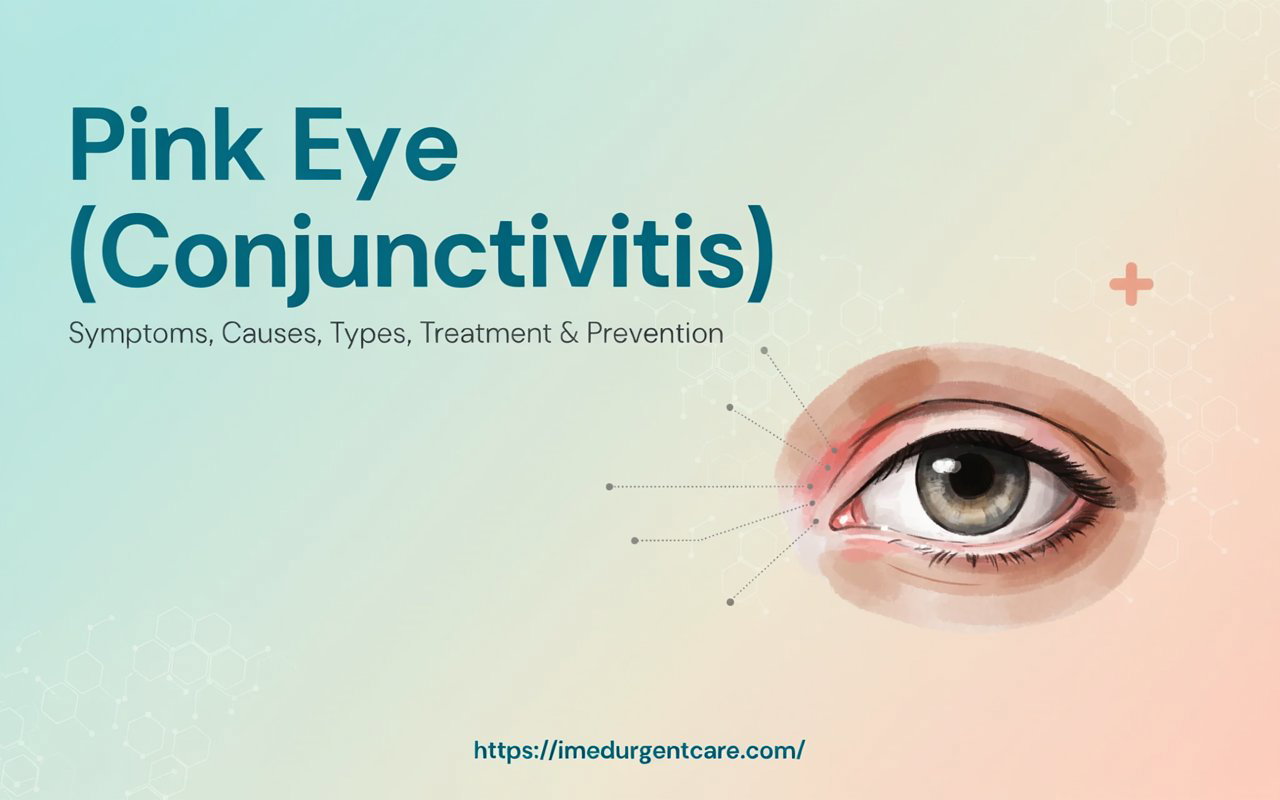
Pink eye (conjunctivitis) is one of the most common eye conditions and develops when the conjunctiva, which is the thin and clear layer covering the white part of the eye and lining the inside of the eyelid, becomes inflamed. This inflammation makes the small blood vessels in your eye more visible, which causes the eye to look pink or red. When caused by a virus or bacteria, it can spread easily through schools, daycares, workplaces, and households. But how can you monitor the symptoms of pink eye at home and when should you see a healthcare provider? Let’s discuss in detail.
What Is Pink Eye (Conjunctivitis)?
Pink eye (conjunctivitis) is inflammation or infection of the conjunctiva, the clear layer that covers the white part of the eye and the inside of the eyelid. It is usually caused by a virus, bacteria, allergy, or irritant. Some common symptoms of conjunctivitis include eye redness, itching, and discharge, while vision is usually not affected.
Pink eye is not just one condition. Different types can look similar but have different causes, how long they can spread, and their treatments depend on it. Treatment for viral pink eye will not help a bacterial infection and antibiotics will not treat allergy-related pink eye. That's why getting the right diagnosis is important.
Common Symptoms of Pink Eye
Pink eye symptoms can vary depending on the cause, but most people have some combination of these symptoms:
-
Redness in one or both eyes
-
Itching, burning, or irritation
-
A gritty feeling, like there is sand in the eye
-
Watery eyes or extra tearing
-
Thick yellow, green, or white discharge that may make the eyelashes stick together, especially after sleep
-
Swelling around the eyelid or eye
-
Mild sensitivity to light
-
Slightly blurry vision that improves when you blink
Symptoms by Type
| Feature | Viral Pink Eye | Bacterial Pink Eye | Allergic Pink Eye |
|---|---|---|---|
| Eyes affected | Often starts in one eye and spreads to both | Often starts in one eye | Usually affects both eyes |
| Discharge | Watery | Thick yellow or green | Watery or stringy mucus |
| Itching | Mild | Mild | Strong or intense |
| Contagious | Yes, highly contagious | Yes, contagious | No |
| Other symptoms | Cold, sore throat, or swollen lymph nodes | Usually affects the eyes only | Sneezing, runny nose, or seasonal allergies |
What Causes Pink Eyes?
There are four main types of causes of pink eye. Knowing the cause can help find the right pink eye treatment.
Viral Infections
Viruses are the most common cause of pink eye. Adenoviruses are a common cause but other viruses, including those that cause colds and flu, can also lead to pink eye. Viral pink eye often happens with or soon after a respiratory infection.
Bacterial Infections
Bacteria such as Staphylococcus and Streptococcus can cause pink eye. Bacterial pink eye often causes thicker yellow or green discharge and is more common in children. Contact lens wearers have a higher risk of developing a more serious eye infection if they continue wearing their lenses.
Allergens
Allergies to pollen, pet dander, dust mites, and mold can cause allergic pink eye. It usually affects both eyes and causes strong itching. Sneezing and a runny nose are also common. People who wear contact lenses for long periods can also develop a type of allergic reaction called giant papillary conjunctivitis.
Irritants
Things such as pool chlorine, smoke, air pollution, chemical fumes, or an eyelash can irritate the eye and cause pink eye symptoms without an infection. Symptoms often improve after the irritant is removed and the eye is rinsed with clean water.
Other Causes Worth Knowing About
-
Newborn conjunctivitis: Pink eye in a newborn during the first few weeks of life can happen due to bacteria during birth. It can become serious quickly, so newborns with red or swollen eyes should be checked by a healthcare provider promptly.
-
Sexually transmitted infections: In rare cases, infections such as gonorrhea or chlamydia can cause severe bacterial pink eye. These infections need specific treatment because they can damage the eye if left untreated.
-
Contact lens wear: Wearing contact lenses for too long, sleeping in them, or not cleaning them properly can increase the risk of bacterial infections and allergic eye irritation.
Types of Conjunctivitis, Explained
Viral Conjunctivitis
Viral conjunctivitis is the most common type of pink eye and is highly contagious. Most cases are mild and clear up on their own within 7 to 14 days, although some can last for two to three weeks. It often happens along with a cold, fever, or sore throat. Adenoviruses can also cause more serious forms that can affect the cornea.
Bacterial Conjunctivitis
Bacterial pink eye often causes thick yellow or green discharge that can make the eyelids stick together overnight. Mild cases can get better on their own within about a week. In some cases, a healthcare provider recommends antibiotic eye drops or ointment, especially for children or people who wear contact lenses.
Allergic Conjunctivitis
Allergic pink eye is not contagious. It is usually caused by seasonal allergies or triggers such as dust and pet dander. Both eyes are often affected, with intense itching, watery eyes, sneezing, or a runny nose. Avoiding the trigger and using allergy eye drops can help relieve symptoms.
Irritant or Chemical Conjunctivitis
This type happens when something irritates the eye rather than causing an infection. Common triggers include smoke, chlorine, dust, and chemical fumes. Rinse the eye with clean water as soon as possible. If a strong chemical gets into the eye, seek urgent medical care.
Neonatal Conjunctivitis
Neonatal conjunctivitis affects babies younger than one month. It can be caused by an infection or irritation and become serious quickly. Any newborn with red, swollen, or draining eyes should receive a quick medical evaluation.
Is Pink Eye Contagious? How Does It Spread?
Viral and bacterial pink eyes can spread easily from person to person. It can spread through contact with eye discharge, touching contaminated surfaces such as phones, doorknobs, towels, or pillowcases, and then touching your eyes. Close contact with someone who has pink eyes can also increase the risk of spreading the infection. This is why pink eyes can spread quickly in schools, daycares, workplaces, and homes.
Allergic and irritant pink eyes are not contagious because they are not caused by an infection that spreads from person to person.
Viral and bacterial pink eyes can spread while there is active discharge and excessive tearing. When to return to school or work can depend on the cause and your symptoms. If antibiotics are prescribed for bacterial pink eye, follow your healthcare provider's instructions and your school or workplace's return policy.
How Is Pink Eye Diagnosed?
A healthcare provider can usually diagnose pink eye with an eye exam and a review of your symptoms. They also ask about recent illnesses, allergies, eye products, contact lens use, or possible exposure to someone with pink eye.
Most cases do not need testing. But if symptoms are severe, keep coming back, do not improve with treatment, or occur in a newborn, your provider can take a sample of the eye discharge for testing. This can help identify the specific infection and guide pink eye treatment.
Pink Eye Treatment Options
Treating Viral Pink Eye
A viral pink eye usually gets better on its own. Cool compresses and artificial tears can help relieve redness and irritation. Avoid contact lenses until your eyes feel better. Antibiotics do not treat viral pink eye. In some serious cases, a doctor can prescribe antiviral medicine.
Treating Bacterial Pink Eye
A healthcare provider can prescribe antibiotic eye drops or ointment. Mild cases can sometimes improve without antibiotics but treatment can help shorten the infection and reduce its spread.
Treating Allergic Pink Eye
Avoiding the allergen is the first step. Antihistamine eye drops or allergy medicine can help reduce itching, redness, and watering.
Treating Irritant Pink Eye
Rinse the eye with clean water or saline and remove the irritant. Symptoms often improve after the irritant is gone. If a chemical gets into the eye, seek medical care promptly.
Home Care Tips for Any Type of Pink Eye
-
Use a clean, cool or warm washcloth to gently remove eye discharge. Use a fresh cloth for each eye.
-
Use artificial tears to soothe irritation and wash away allergens or debris.
-
Avoid contact lenses until your symptoms are fully gone.
-
Don't touch or rub your eyes.
-
Wash your hands often, especially after touching your eyes.
-
Wash pillowcases and towels, and replace any eye makeup used during the infection.
-
Don't share towels, washcloths, or eye makeup with others.
What to Avoid
-
Don't use leftover prescription eye drops from an old infection.
-
Don't wear contact lenses until your provider says it is safe.
-
Don't use steroid eye drops unless prescribed by a healthcare provider.
-
Don't use antibiotics unless they are recommended for your condition. They won't help viral or allergic pink eyes.
When to See a Doctor for Pink Eye
Most cases of pink eye are mild and get better with time. But you should see a healthcare provider if you have moderate or severe eye pain, strong sensitivity to light, vision changes, worsening symptoms, severe redness or swelling, or discharge that keeps coming back. You should also seek care if you have a weakened immune system, a history of herpes or shingles affecting the eye, or pink eye symptoms in a newborn. If a pink eye starts after a chemical splash or eye injury, get medical care quickly.
At iMed Urgent Care, Ohio, you can get a same-day evaluation for pink eye with walk-in visits seven days a week. Our in-house lab can help determine whether your symptoms can be caused by a virus, bacteria, or another cause. Visit any of our location at:
-
Grove City (3206 Broadway)
-
East Columbus (3331 E Broad St)
-
South Columbus (3865 S High St) location
You don't need an appointment. We are available for you when you need the actual care.
FAQs
Is Pink Eye a Medical Emergency?
Usually, no. Most cases are mild and improve with home care or treatment. But severe eye pain, vision changes, strong sensitivity to light, or pink eye in a newborn needs same-day medical attention.
How Do You Get Pink Eye?
Pink eye can be caused by a virus, bacteria, allergies, or irritants. Viral and bacterial pink eye can spread through close contact, touching infected eye discharge, or touching contaminated surfaces and then touching your eyes.
How Long Does Pink Eye Last?
It depends on the cause. Viral pink eye often clears up within 7 to 14 days, while bacterial pink eye can improve within about a week. Allergic pink eye can continue as long as you are exposed to the allergen.
How Can Urgent Care Help Treat Pink Eye?
Urgent care centres in Ohio can examine your eyes, identify the likely cause, and recommend the right treatment. Depending on the cause, treatment include artificial tears, allergy medicine, or antibiotic or antiviral medication.