Quick Answer: What Is RSV and When Should You Go to Urgent Care?
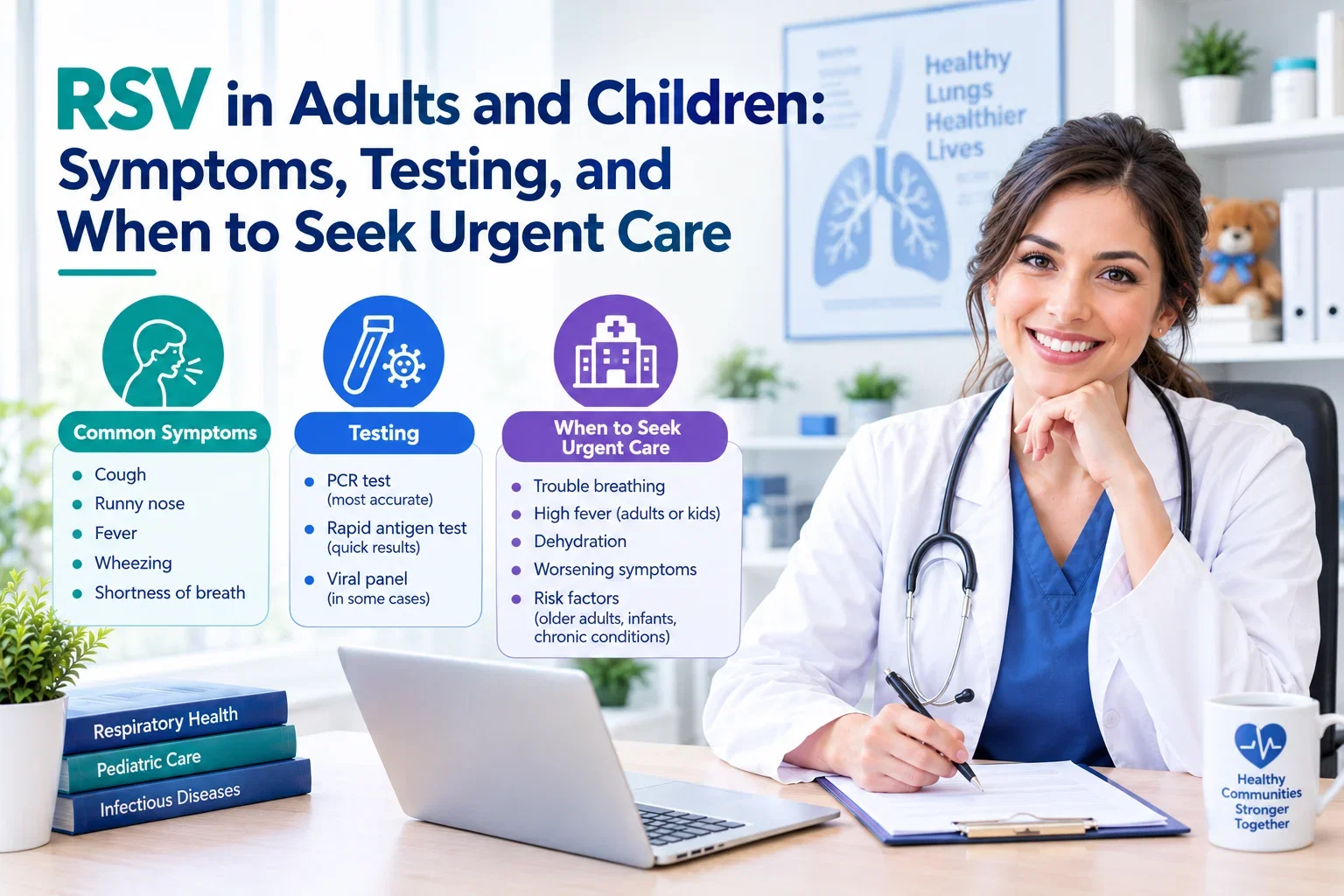
| RSV (respiratory syncytial virus) is a common and contagious respiratory virus that causes cold-like symptoms such as a runny nose, cough, sneezing, and low-grade fever. Most healthy adults and older children recover at home in one to two weeks. Babies, older adults, and people with heart, lung, or immune conditions can get seriously ill. Go to urgent care if symptoms last longer than a week, keep getting worse, include a fever that will not settle, or you want testing and a clear plan. |
What Is RSV?
Respiratory syncytial virus or RSV, infects the nose, throat, and lungs. It spreads through coughs and sneezes, through direct contact such as kissing a child's face and through touching contaminated surfaces like doorknobs, toys and phones before touching your eyes, nose, or mouth.
Nearly every child is infected with RSV after birth and reinfection throughout life is common. And this infection has no protection so you can catch it again in the same season or the next one.
The CDC estimates that each year in the United States, RSV causes roughly 58,000 to 80,000 hospitalizations in children under 5 and roughly 100,000 to 160,000 hospitalizations in adults 65 and older. That is why it is important to know the warning signs, even though most cases are mild.
RSV Season in Ohio
In most parts of the United States, including Ohio, RSV spreads mainly during fall, winter, and early spring. Cases usually begin to rise in October or November and cases increase between December and February. Schools, daycares, holiday gatherings, and crowded indoor spaces can make it easier for the virus to spread.
If you or your child develops a cough and congestion during these months, RSV is one possible cause. The flu, COVID-19, and the common cold can cause similar symptoms.
RSV Symptoms in Adults
Most healthy adults feel like they have a bad cold. Symptoms usually appear four to six days after exposure and often develop gradually rather than all at once.
Common RSV symptoms in adults:
-
Runny or stuffy nose
-
Cough, often dry at first and sometimes wet later
-
Sneezing
-
Headache
-
Tiredness and body fatigue
-
Low-grade fever (fever is less common in adults than in children)
-
Decreased appetite
-
Mild wheezing
Signs RSV can be becoming serious in an adult:
-
Shortness of breath or rapid breathing
-
Wheezing that is getting louder or more frequent
-
Chest pain or tightness
-
A fever that rises or returns after improving
-
Blue or gray tint to lips or fingertips
-
Confusion, unusual drowsiness, or dizziness
-
Signs of dehydration like very dark urine, dizziness when standing or not being able to keep fluids down
-
Worsening asthma, COPD, or heart failure symptoms
Older adults sometimes do not get a high fever even when they are quite sick. A sudden change in energy, appetite, or alertness can be the first clue.
RSV Symptoms in Children and Babies
RSV often starts like a cold in children too but it can spread into the lower airways (the small tubes in the lungs). That can cause bronchiolitis (inflammation of the small airways) or pneumonia, especially in babies.
Early RSV symptoms in children:
-
Runny nose and congestion
-
Cough
-
Decreased appetite or drinking less
-
Sneezing
-
Fever (not always present)
-
Fussiness and lower energy
Symptoms often get worse around days three to five, which is why a child who seems fine at first can look much sicker a few days later.
Signs of RSV in babies under 1 year:
-
Irritability or unusual fussiness
-
Less activity than normal
-
Poor feeding or tiring quickly during feeds
-
Fewer wet diapers than usual
-
Fast, shallow or labored breathing
-
Pauses in breathing (apnea), especially in newborns and premature babies
In very young infants, irritability, low energy, and trouble feeding can be the only signs. Many babies with RSV do not have a fever.
Severe RSV warning signs in children (seek emergency care):
-
Skin pulling in around the ribs or neck with each breath (retractions)
-
Nostrils flaring or head bobbing while breathing
-
Grunting sounds with breaths
-
Wheezing that does not ease
-
Blue or gray color around the lips, mouth, or fingernails
-
Pauses in breathing
-
No wet diaper in 6 to 8 hours or no tears when crying
-
Too sleepy to feed or hard to wake
-
Any fever in a baby under 3 months old (100.4 degrees F or higher) needs same-day medical care
RSV vs. Cold vs. Flu vs. COVID-19
These illnesses have many symptoms in common, so it can be difficult to tell them apart based on symptoms alone. The table below shows their general differences.
| Feature | RSV | Common cold | Flu | COVID-19 |
| Onset | Develops gradually | Develops gradually | Starts suddenly | Varies |
| Fever | Mild or absent in adults but more common in children | Rare or mild | Common, often high | Common |
| Cough | Common, can include wheezing | Usually mild | Common, often dry | Common |
| Wheezing or fast breathing | More common, especially in babies | Uncommon | Possible | Possible |
| Body aches | Usually mild | Usually mild | Often severe | Varies |
| Loss of taste or smell | Uncommon | Uncommon | Uncommon | More common |
| Biggest concern | Babies, older adults and people with heart or lung conditions | Rarely serious | Can be severe, has antiviral treatment | Can be severe, has antiviral treatment |
Why this matters: Flu and COVID-19 have antiviral medicines that work best when started early but RSV does not have a routine antiviral for most patients. So testing can help sort out which virus you have and whether a prescription would help.
RSV Testing: What to Expect
Do you always need an RSV test?
Not always. Healthy adults and older children with mild symptoms do not need testing because care at home is the same either way. Testing is most useful when:
-
The patient is a baby, an older adult, or has a heart, lung, or immune condition
-
Symptoms are moderate to severe or getting worse
-
You need to know whether it is RSV, flu, or COVID-19 because an antiviral could help
-
A new baby, pregnant family member, or high-risk person lives in the home
-
A school, daycare, or care facility needs an answer
How is RSV tested?
RSV testing is simple and quick. A provider collects a sample from the inside of the nose with a swab. The sample is checked with either:
-
A rapid antigen test, which can give results in minutes and works best in babies and young children who tend to carry more virus
-
A PCR (molecular) test, which is more sensitive and is often used when a rapid test is negative but suspicion is high, especially in older children and adults
Rapid RSV tests are less accurate in adults, so a negative result does not always mean you do not have RSV. Your provider will consider your symptoms, exam, and risk factors along with the test result.
Does urgent care test for RSV?
Many urgent care centers do and a visit also lets a provider check your oxygen level, listen to your lungs, and decide whether you need a chest X-ray, a different test, or a higher level of care. Testing availability and the minimum patient age can vary by location so call your nearest urgent care center or iMed Urgent Care clinic if you are in Ohio before you come in if you have a baby or toddler.
Urgent Care vs. ER: When to Go Where
| Go to urgent care if... | Go to the ER or call 911 if... |
| Cold symptoms last more than 7 to 10 days | Difficulty in breathing or breathing is very fast or labored |
| Cough or wheeze is getting worse | Skin sucks in between the ribs or at the neck with each breath |
| Fever lasts more than 2 to 3 days in an older child or adult | Lips, tongue, or fingernails look blue or gray |
| You are a higher-risk adult and want to be checked early | Pauses in breathing or a baby is limp or hard to wake |
| Ear pain, sinus pain, or a barking or wet cough develops | Signs of serious dehydration like no wet diaper in 6 to 8 hours, no tears, sunken soft spot |
| You want testing, a lung check, and a care plan | Chest pain, confusion, or fainting in an adult |
| Symptoms are mild in a child over 3 months but you are unsure | Fever of 100.4 degrees F or higher in a baby under 3 months |
How to Treat RSV at Home
There is no cure for RSV and antibiotics do not work on viruses. Treatment focuses on comfort and hydration while the body clears the infection.
Home care for adults and older children
-
Get plenty of rest and give your body time to recover.
-
Drink plenty of fluids, such as water, broth, and electrolyte drinks.
-
Use a cool-mist humidifier or take a warm shower to help loosen congestion.
-
Use saline nasal sprays or rinses to clear your nose. Use only distilled or boiled and cooled water for nasal rinses.
-
Take acetaminophen or ibuprofen for fever and body aches as directed on the label, if appropriate for your age.
-
Use honey to soothe a cough in anyone over 1 year old.
-
Avoid smoke, vaping, and strong fumes that can irritate your airways.
-
Raise your head slightly while sleeping if congestion gets worse at night.
Home care for babies and young children
-
Clear the nose with saline drops and gentle suction before feeds and sleep
-
Offer smaller, more frequent feeds to prevent tiring and dehydration
-
Count wet diapers as fewer than usual is a warning sign
-
Use a cool-mist humidifier in the room
-
Keep the baby upright after feeds and keep the environment smoke-free
How Long Does RSV Last? How Long Is It Contagious?
-
Incubation period: About 4 to 6 days after exposure.
-
Illness duration: Usually 1 to 2 weeks but the cough can last several more weeks, especially in children.
-
Contagious period: Most people can spread RSV for about 3 to 8 days, sometimes starting 1 to 2 days before symptoms appear.
-
Longer contagious period: Babies and people with weakened immune systems can spread RSV for up to 4 weeks, even after they start feeling better.
When can you return to work or school in RSV? When you have been fever-free for 24 hours without fever-reducing medicine, symptoms are clearly improving, and you feel well enough to take part in your day. Keep distance from babies, older adults, and anyone at high risk for as long as you are coughing or have a runny nose.
Possible Complications of RSV
-
Bronchiolitis: swelling of the small airways, most common in babies
-
Pneumonia: infection of the lungs
-
Dehydration: from poor drinking or feeding
-
Worsening of asthma, COPD, or heart failure
-
Respiratory failure in severe cases
-
Secondary bacterial infection, which is why symptoms that improve and then suddenly worsen should be checked
How iMed Urgent Care Can Help
When you or your child is coughing, congested, or just not breathing right, you want an immediate solution. iMed Urgent Care in Ohio offers walk-in visits seven days a week at three locations across the Columbus area:
During a visit, our team can evaluate symptoms, check oxygen levels, listen to the lungs, and talk through testing and treatment options. If a higher level of care is needed, we will tell you and help you take the next step. Call ahead if you are bringing a baby or toddler so the clinic can confirm testing availability and the best location for you.