
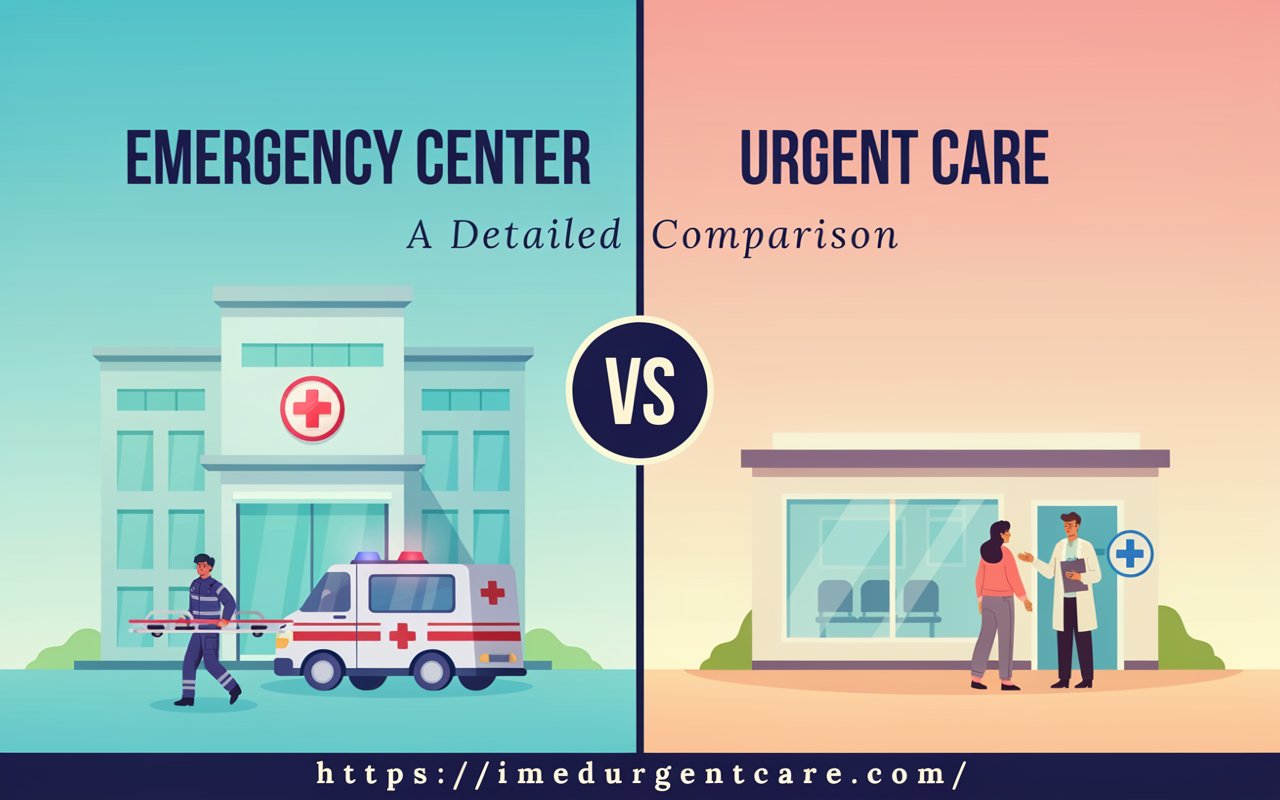
When you are in pain, uncertain, or worried about your family member, you can’t make the decision whether to go to an emergency center or an urgent care center. And sometimes people mistakenly visit an emergency center for minor illnesses, while others delay emergency treatment because they think urgent care can handle serious conditions.
That choice of treatment really matters as it can lead to higher medical bills, longer wait times, or delayed treatment. And you can’t take any risk when your loved ones need immediate care.
That’s why it is important to understand the difference between an emergency center vs urgent care to choose the right care at the right time. So let’s discuss it.
Quick Answer
| What is Urgent Care vs Emergency Care? Urgent care is best for non-life-threatening conditions that need same-day attention for sprains, minor cuts, infections, fevers, and flu symptoms. Emergency centers (ERs) are for life-threatening or limb-threatening conditions, including chest pain, difficulty breathing, severe bleeding, stroke symptoms, or major trauma. |
What Is an Emergency Center?
An emergency center that is commonly called an Emergency Room (ER) is a medical facility that is designed to diagnose and treat severe, life-threatening, or limb-threatening conditions that require immediate intervention. Emergency centers are staffed 24/7 with advanced medical technology, specialists, surgeons, full laboratory services, and intensive care services. They have resources to stabilize and, if needed, admit patients for ongoing hospital care.
Key characteristics of emergency centers:
-
Open 24 hours a day, 7 days a week, 365 days a year
-
Staffed by board-certified emergency medicine physicians
-
Equipped with advanced diagnostic imaging including CT, MRI, or ultrasound
-
Capable of handling trauma, cardiac events, strokes, and surgical emergencies
-
Legally required under EMTALA in the U.S. to treat and stabilize all patients regardless of ability to pay
-
Higher cost due to the level of staffing, equipment, and readiness required
Go to the Emergency Room if you feel:
-
Heart attacks
-
Strokes
-
Severe trauma
-
Major burns
-
Serious infections
-
Internal bleeding
-
Respiratory failure
-
Severe allergic reactions
-
Major fractures
-
Seizures
What Is Urgent Care?
Urgent care centers bridge the gap between your primary care physician and the emergency room because people sometimes can’t wait 3 or 4 days to get an appointment in primary care and also can’t go to an emergency room for a minor injury or illness.
These facilities treat non-life-threatening illnesses and injuries that need quick attention but don't require advanced emergency treatments.
Key characteristics of urgent care:
-
Extended hours, usually from 8 a.m. to 8 p.m., including weekends
-
Walk-in appointments, so no referral needed
-
Staffed by physicians, nurse practitioners, and physician assistants
-
Equipped for basic labs, stitches, and minor procedures
-
Significantly lower cost than an ER visit
-
Shorter average wait times
Visit urgent care center if you have:
-
Minor Injuries like Sprains and strains, Minor burns, or Sports injuries
-
Common Illnesses including fever, Cold and flu symptoms, Sinus infections, Sore throat, or Stomach bugs
-
Skin Conditions like Rashes, Minor allergic reactions, and Poison ivy
-
Diagnostic Services including Laboratory testing, Flu testing, Urinalysis, or Basic blood work
Emergency Center vs Urgent Care: Key Differences
Severity of Medical Conditions
Think about whether an ailment is life-threatening. If it is so and the answer is yes, then go to an emergency room. If you do not feel this and your answer is no, then it is more convenient for you to go to an urgent care center.
Cost Differences
There are huge cost differences in both.
Emergency room visits are more expensive due to extensive resources. Even minor conditions treated in an ER can cost you large medical bills. This cost varies from hundreds to thousands of dollars depending on tests, imaging, and insurance coverage.
Urgent care visits are generally much more affordable. Patients often choose urgent care because they can receive immediate treatment without the financial burden of emergency services. For minor illnesses and injuries, urgent care saves patients hundreds or even thousands of dollars. That’s why annual visits to the emergency room are 140 million and urgent care centers have 200 million people in the U.S.
Insurance tip: Most insurance plans charge a much higher copay for ER visits, usually $150–$500+ as compared to urgent care that costs $25–$75. Always check with your insurance provider, as visiting an ER for a non-emergency condition can cause a claim denial or extra bills.
Wait Times
Urgent care centers offer walk-in services and operate largely on a first-come, first-served basis, with most patients seen within 15–30 minutes.
Emergency rooms use a triage system, which means patients are seen based on the severity of their condition, not the order they arrive in. This means a person with a minor complaint waits several hours while patients with major burns or strokes are seen immediately. As a result, wait times can range from several minutes to several hours.
Availability of Specialists
Emergency centers have immediate access to surgeons, cardiologists, neurologists, trauma specialists, and intensive care physicians 24 hours.
Urgent care facilities usually have family medicine physicians, physician assistants, and nurse practitioners. If specialized care is required, urgent care providers can refer patients to emergency departments or specialists.
Benefits of Choosing Urgent Care
Affordable Care: Medical expenses continue to rise and this situation makes urgent care centers cost-effective healthcare.
Extended Hours: Many urgent care clinics stay open evenings and weekends. This makes them ideal when your primary physician is unavailable.
Walk-In Convenience: No appointments needed here. Patients can simply walk in and receive care quickly.
Comprehensive Services: Modern urgent care centers provide diagnostic testing, physical exams, vaccinations, minor procedures, and occupational health services.
Pediatric Care: Where Should Parents Go?
Children are very sensitive and parents can't take any risks with their child's health.
Urgent Care Is Suitable For:
-
Mild fevers
-
Cold symptoms
-
Minor rashes
Emergency Care Is Necessary For:
-
Breathing difficulties
-
Seizures
-
Severe dehydration
-
Serious injuries
-
Loss of consciousness
How iMed Urgent Care Helps Patients
iMed Urgent Care has served thousands of patients for years. Our goal is to provide high-quality, compassionate care for non-life-threatening illnesses and injuries.
That’s why we offer:
-
Short waiting times
-
On-site diagnostic testing
-
Treatment for common illnesses and minor injuries
-
Affordable healthcare solutions
-
Experienced medical professionals
Whether you're dealing with flu symptoms , a minor injury, an infection, or need immediate medical attention, just walk into our nearby location in Ohio. We have convenient locations in South High Columbus, Grove City, or East Columbus. Just walk in and leave your headache to us.

Created by DearDoc.
iMed Urgent Care © All right reserved.